Wender Pets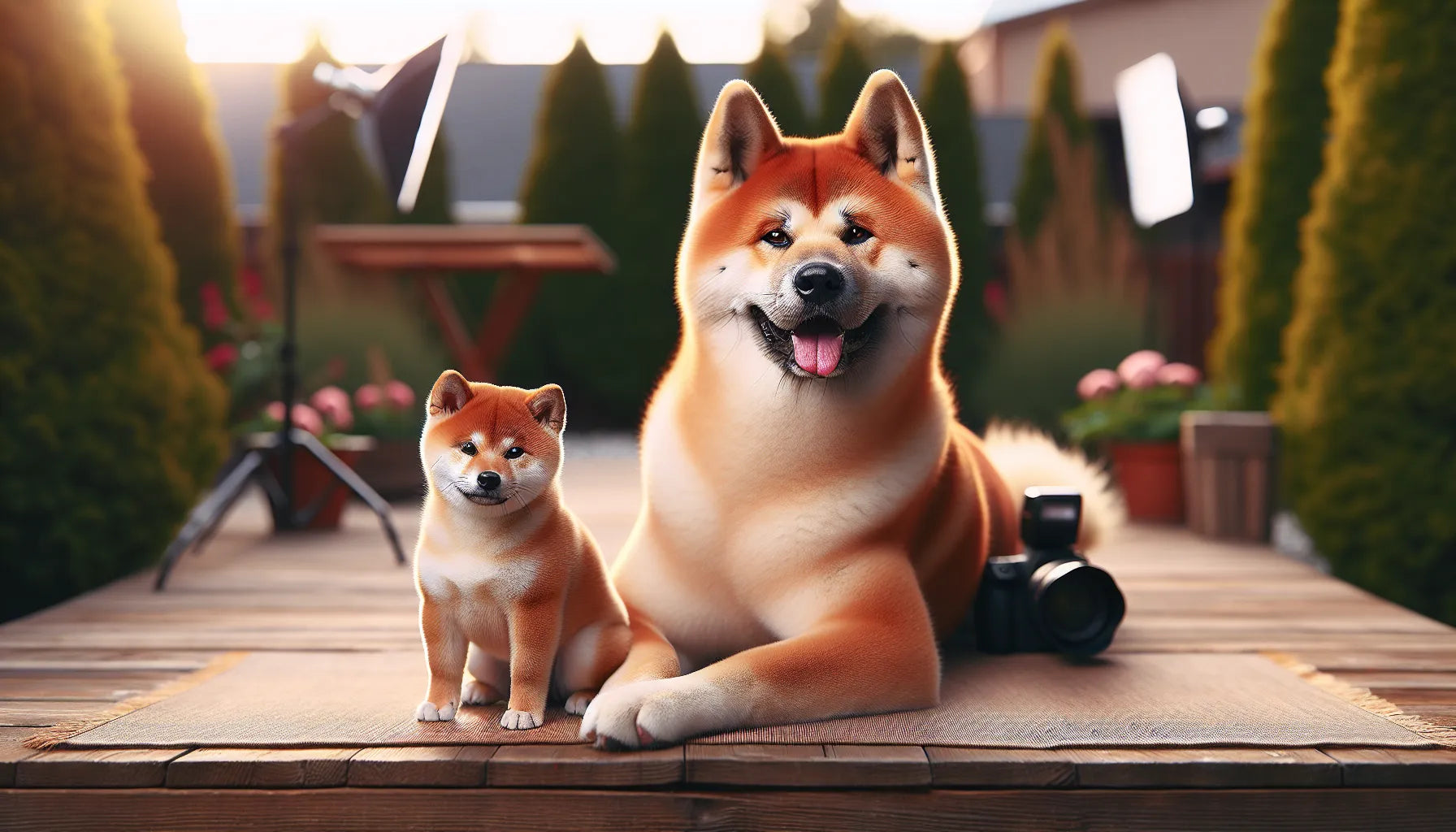
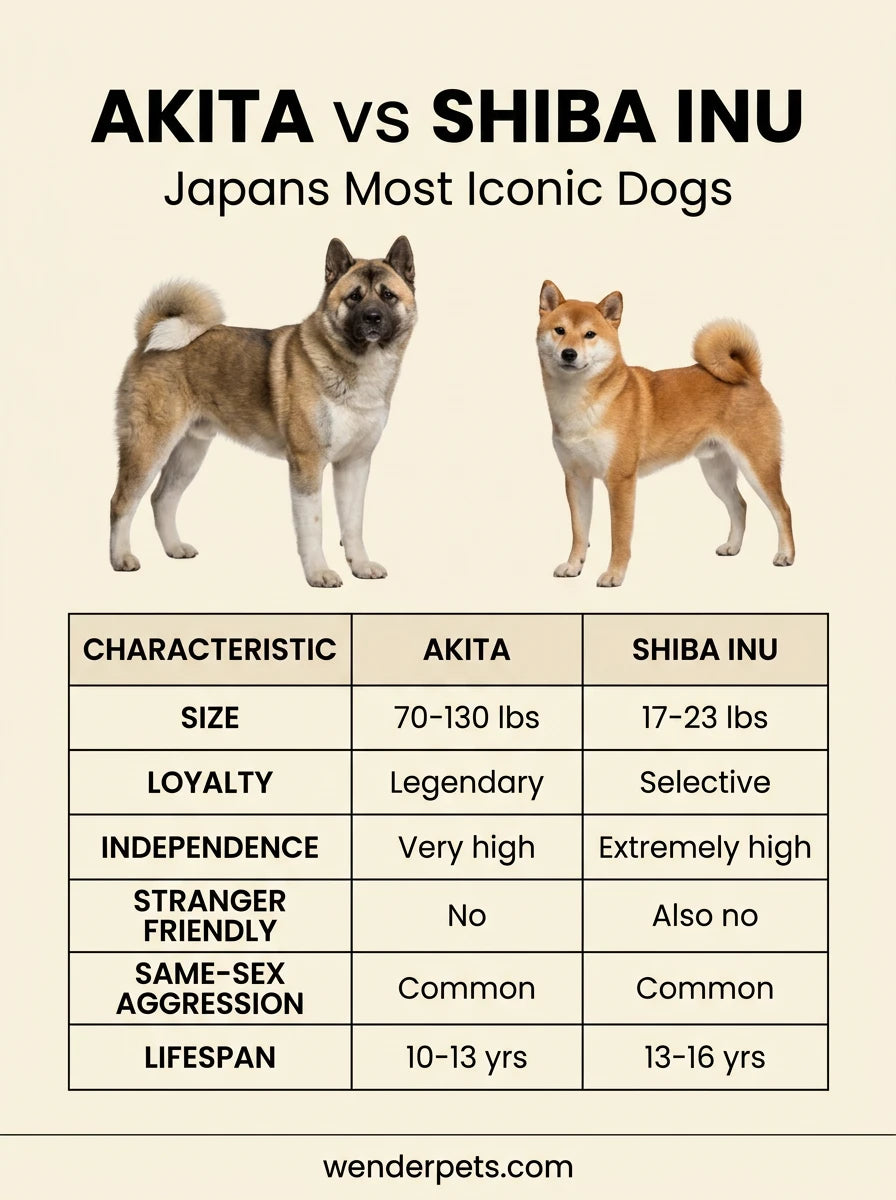
The Akita and the Shiba Inu both hail from Japan. Both have that unmistakable Spitz look — curled tails, fox-like faces, thick double coats. People often describe the Shiba as a "mini Akita."
This description is dangerously wrong. These are completely different dogs that happen to share a country of origin and a general shape.
The Quick Comparison
🏔️ Akita
- Weight: 70-130 lbs
- Originally bred for: Hunting bear, elk, wild boar
- Guard instinct: Very high — natural protectors
- Dog aggression: Common, especially same-sex
- Independence: Extreme — cat-like
- Lifespan: 10-13 years
🦊 Shiba Inu
- Weight: 17-23 lbs
- Originally bred for: Flushing small game
- Guard instinct: Alert but not protective
- Dog aggression: Can be reactive
- Independence: Extreme — cat-like
- Lifespan: 13-16 years
The One Thing They Share: Cat Software
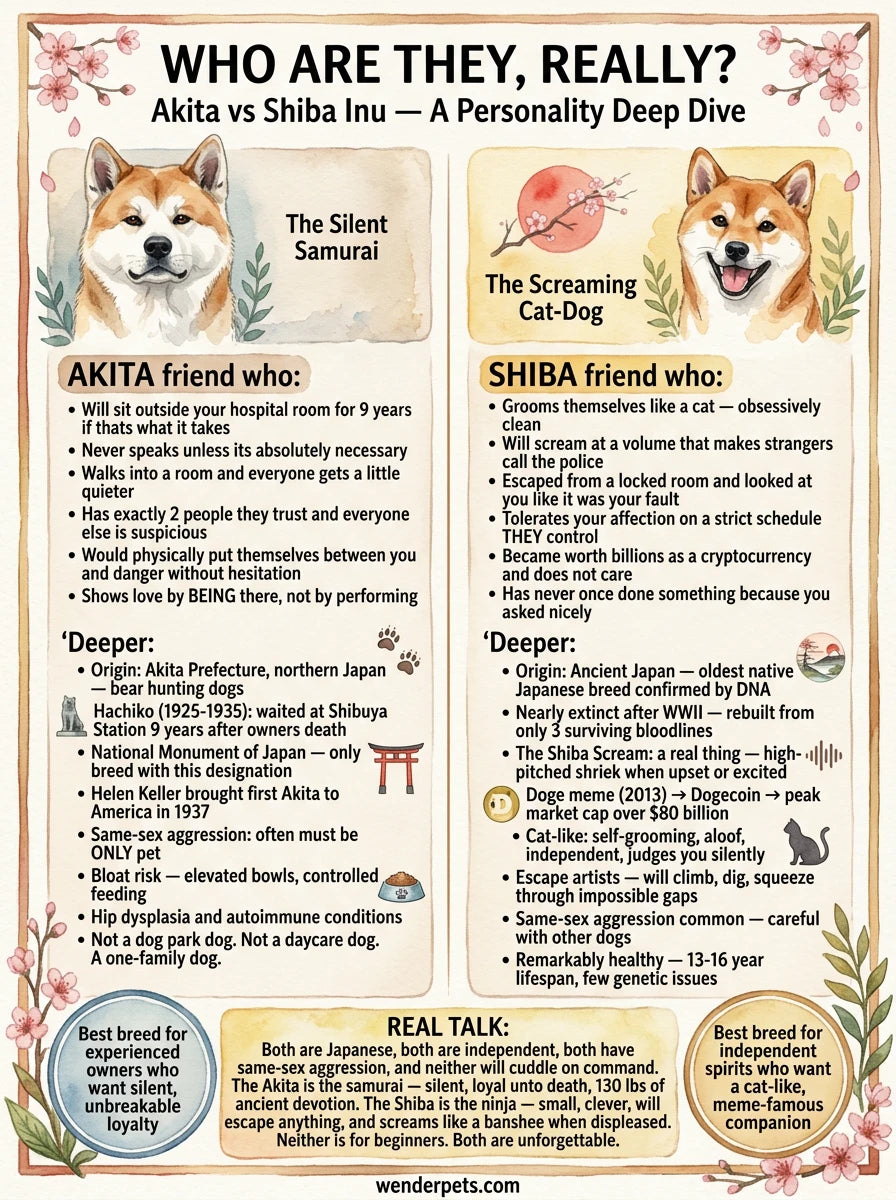
Both breeds run on what owners universally describe as "cat software." They're fastidiously clean. They groom themselves. They decide when they want affection (and when they emphatically don't). They stare at you with an expression that clearly says, "I'm choosing to be here. For now."
If you want a dog that worships the ground you walk on, neither of these breeds is for you. If you respect independence and find aloofness charming, welcome to the Japanese Spitz life.
Size Creates Completely Different Experiences
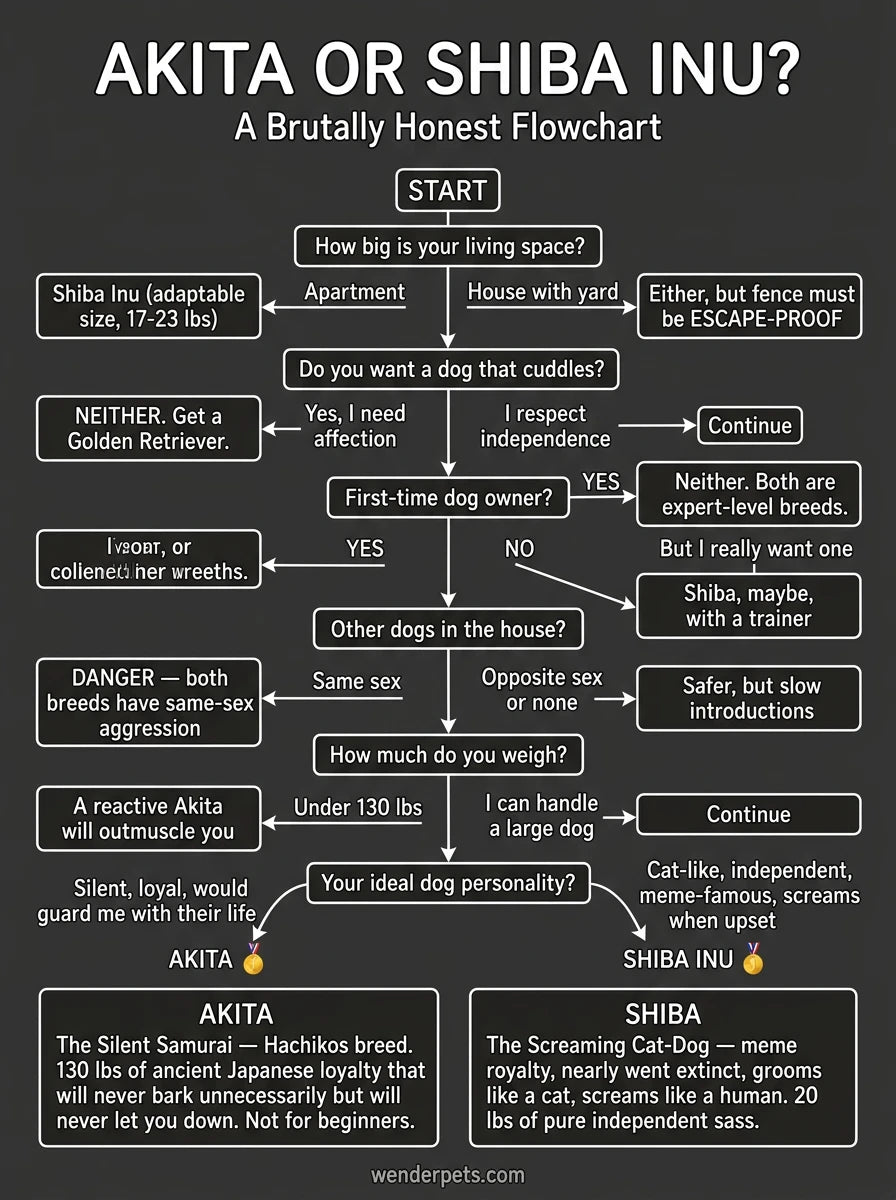
An Akita that decides it doesn't want to do something is a 100+ pound problem. They're powerful, confident, and perfectly comfortable saying no. This is a breed that requires experienced handling, early socialization, and an owner who can provide calm authority without force.
A Shiba Inu that decides it doesn't want to do something is a 20-pound problem. Still stubborn, still dramatic (YouTube "Shiba scream" for proof), but physically manageable. This makes the Shiba more accessible for first-time independent-breed owners.
The Dog Aggression Issue
⚠️ Important Warning
Akitas are frequently dog-aggressive, especially toward dogs of the same sex. This is a breed trait, not a training failure. Many Akita owners are "only dog" households for this reason. Dog parks are generally not recommended. Shibas can also be dog-reactive but are more manageable due to size. Neither breed is ideal for multi-dog households without careful management.
Living With an Akita
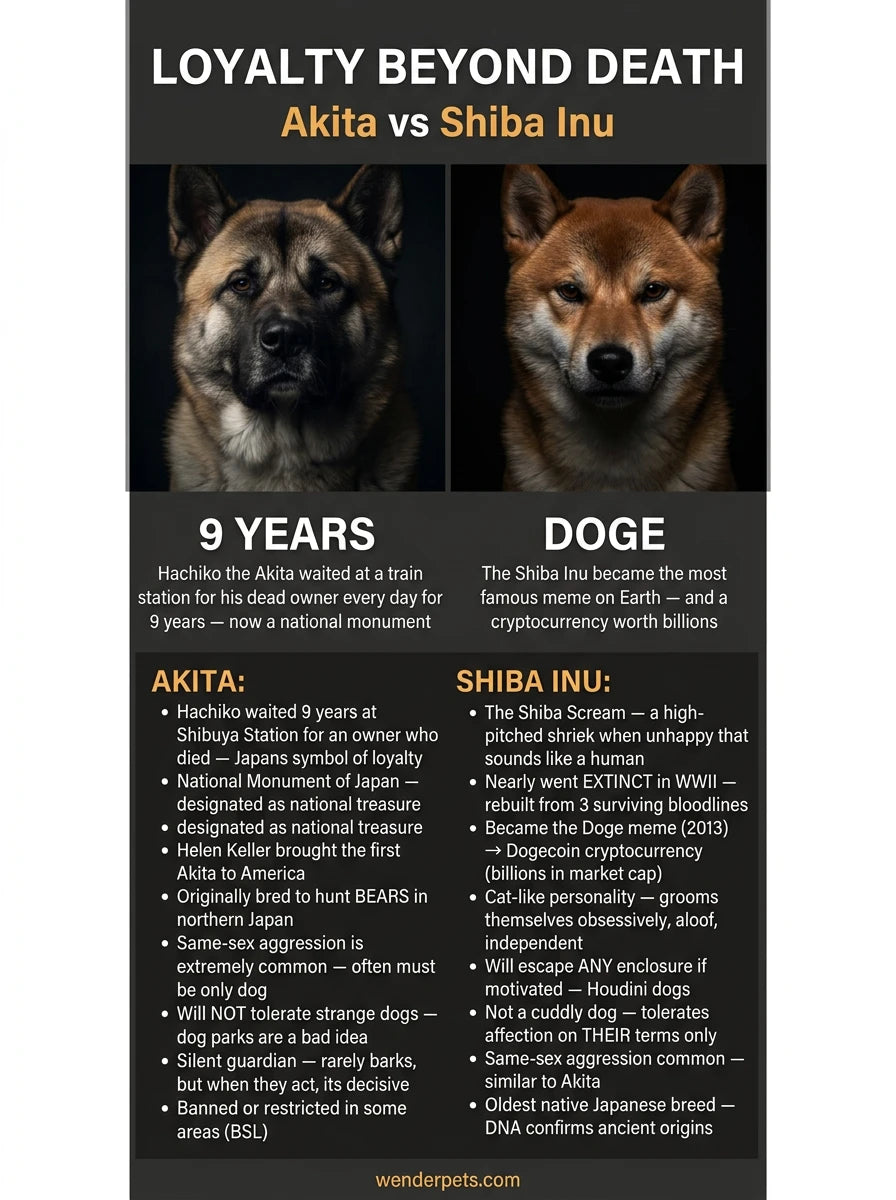
Akitas are deeply loyal to their family and naturally suspicious of strangers. They don't need guard training — guarding is in their DNA. They're quiet (rarely bark without reason), powerful, and dignified. Hachiko, the world's most famous loyal dog, was an Akita.
They're moderate-energy dogs — a good daily walk or two satisfies them physically. Their challenge isn't exercise; it's socialization, dog-aggression management, and providing the structured leadership they require.
Living With a Shiba Inu
Shibas are the internet's favorite dog for a reason — they're expressive, dramatic, and endlessly entertaining. The Shiba scream (a high-pitched vocalization they deploy when displeased) is both hilarious and ear-splitting.
They're moderate-energy, clean, compact, and surprisingly adaptable to apartment living. Their biggest challenge is recall — a Shiba off-leash is a Shiba that has decided to explore, and no amount of calling will change that. Leash. Always.
Health Comparison
Akita Health Watch
- • Hip dysplasia
- • Autoimmune conditions
- • Bloat (GDV)
- • Progressive retinal atrophy
- • Hypothyroidism
Shiba Inu Health Watch
- • Patellar luxation
- • Allergies (environmental and food)
- • Hip dysplasia
- • Eye conditions
- • Generally very healthy breed
The Verdict
Choose an Akita if you...
- • Want a powerful, loyal family guardian
- • Have experience with large, independent breeds
- • Can commit to extensive socialization
- • Don't have other dogs (or can manage carefully)
Choose a Shiba Inu if you...
- • Want an independent, cat-like companion
- • Live in an apartment or smaller space
- • Appreciate drama and personality in a compact package
- • Are OK with a dog that may never reliably come when called