Wender Pets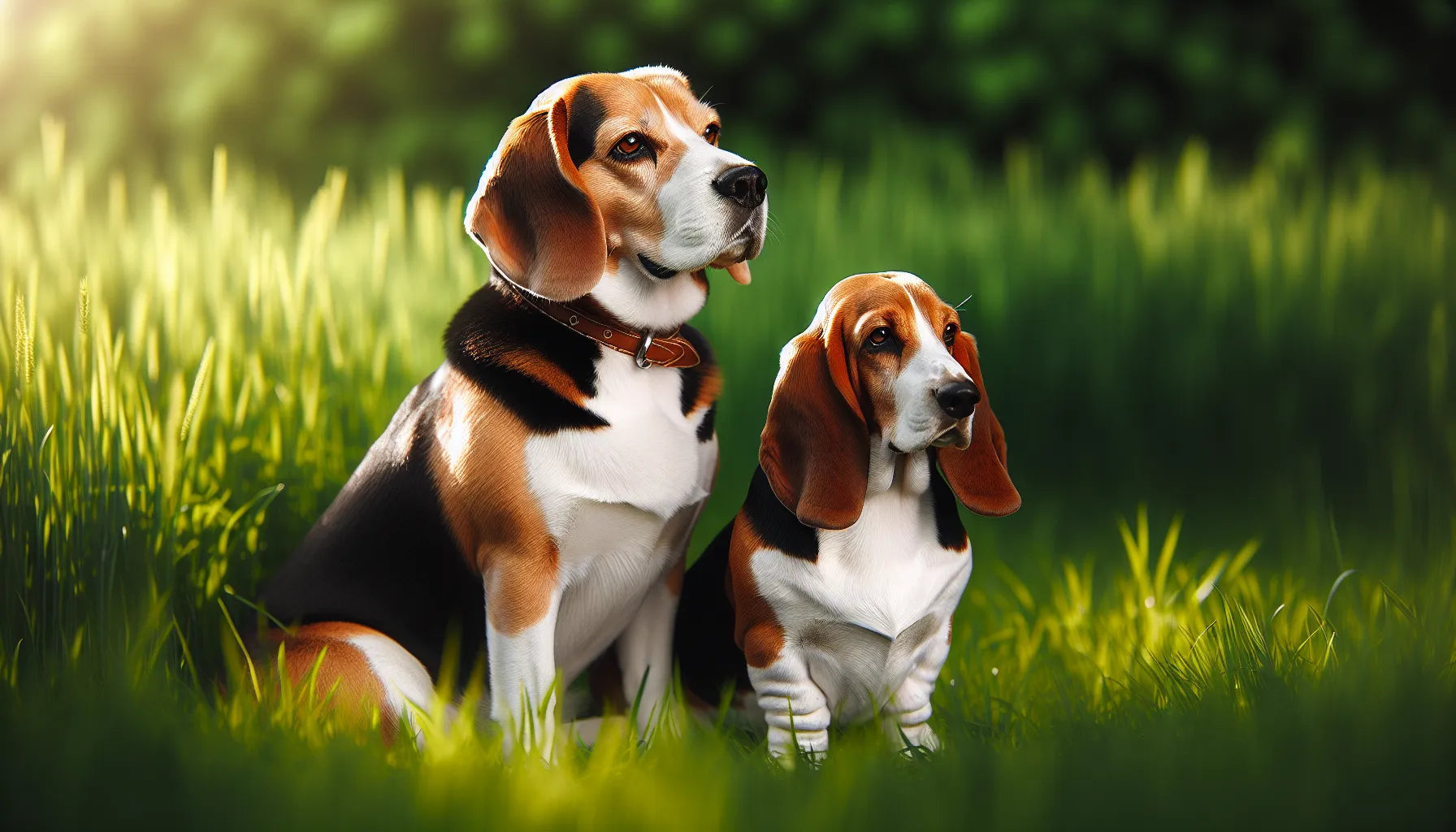
The Beagle and the Basset Hound are both scent hounds — dogs bred to track game using their extraordinary noses. They share those irresistible floppy ears, those soulful eyes, and that complete inability to come when called if there's a smell worth investigating.
But these two hounds live at very different speeds.
The Quick Comparison
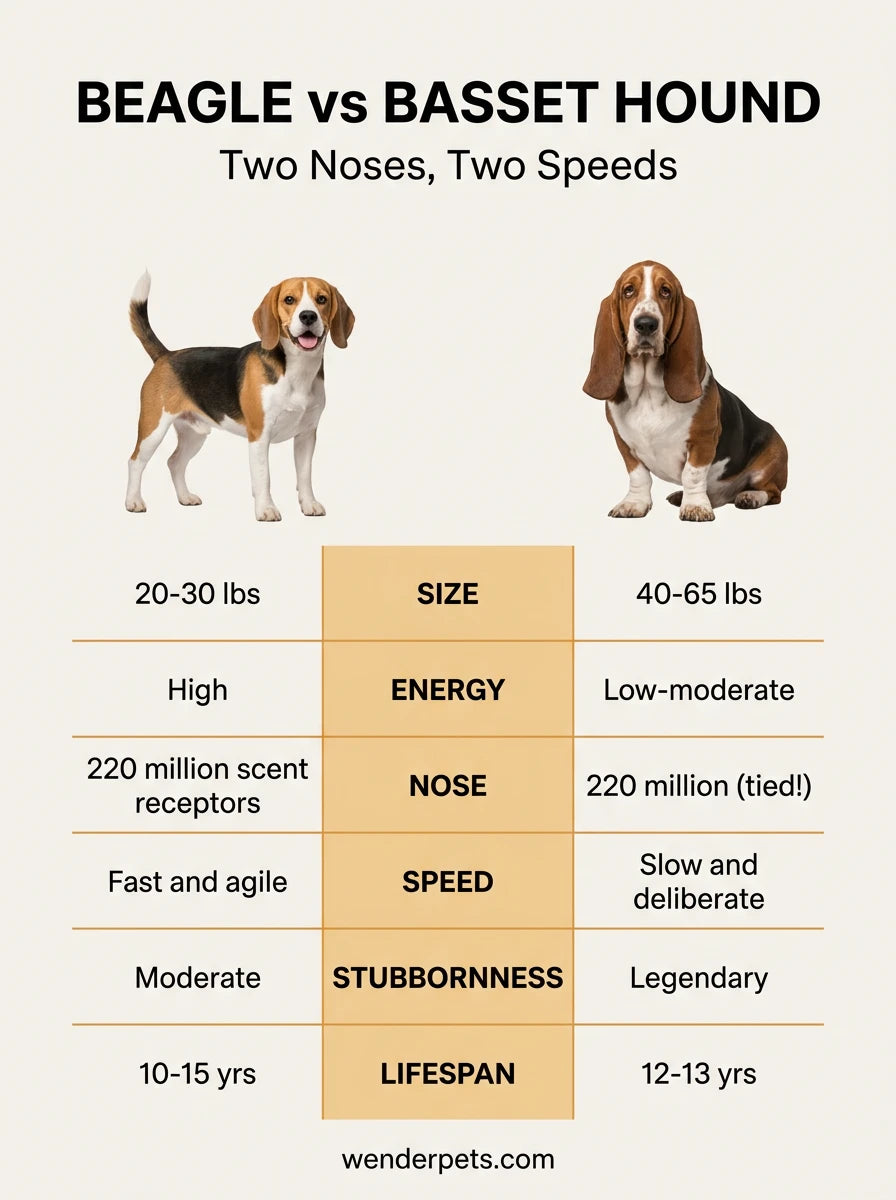
🐕 Beagle
- Weight: 20-30 lbs
- Energy: High — needs daily exercise
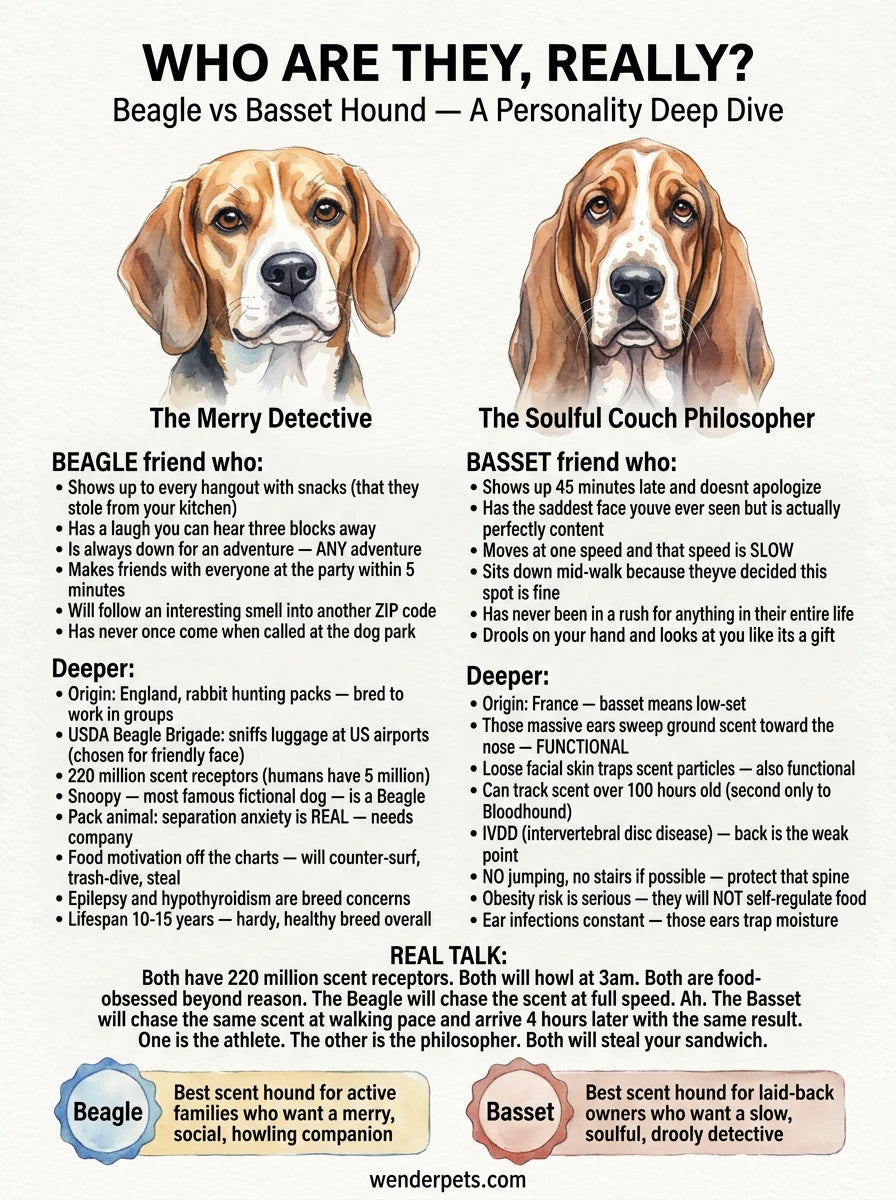
- Personality: Merry, curious, pack-oriented
- Stubbornness: High — nose overrides brain
- Howling: The famous "arooo"
- Lifespan: 10-15 years
🦮 Basset Hound
- Weight: 40-65 lbs
- Energy: Low — professional couch warmer
- Personality: Laid-back, gentle, stubborn
- Stubbornness: Legendary — selective deafness
- Howling: Deep, mournful bay
- Lifespan: 10-12 years
Energy: The Athlete vs The Philosopher
The Beagle is a surprisingly athletic little dog. Don't let the compact size fool you — they were bred to chase rabbits for hours, and they still have that endurance. They need 1-2 hours of exercise daily and they'll happily hike, run, or play fetch until you quit first.
The Basset Hound was bred to track game at a pace slow enough for hunters to follow on foot. They've taken that job description to heart. A Basset considers a slow amble around the block to be a marathon. They need moderate daily exercise for health (30-60 minutes), but they will not volunteer for it.
The Nose Knows
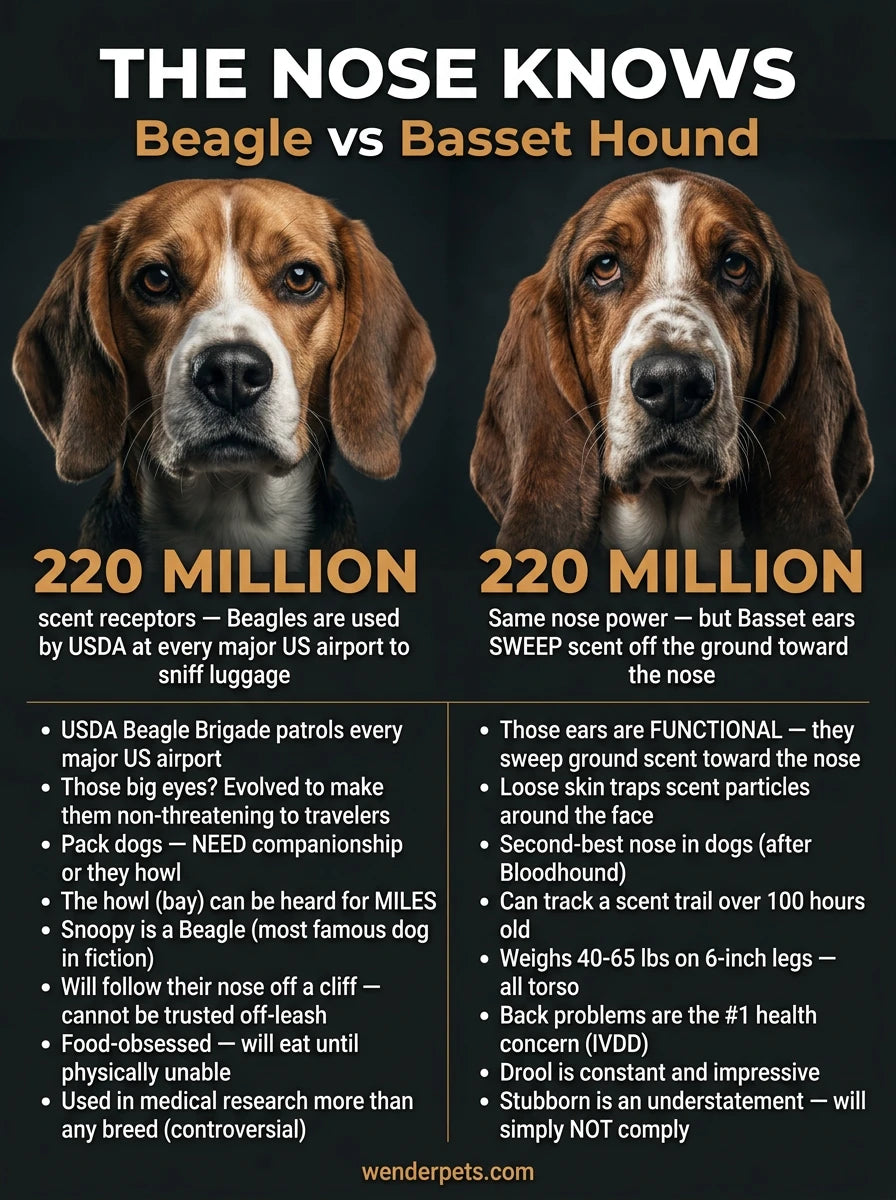
Both breeds have among the best noses in the canine world. The Basset Hound has the second-best nose after the Bloodhound, with approximately 220 million scent receptors. The Beagle isn't far behind.
This means both breeds are essentially unreachable by voice when they're following a scent. It's not stubbornness (well, not entirely) — it's that their nose creates a sensory experience so overwhelming that your voice literally doesn't register. Fenced yards and leashes are non-negotiable for both breeds.
The Howling Issue
Both breeds howl. It's in their DNA — pack hounds need to communicate across distance.
The Beagle's "arooo" is iconic — sharp, carrying, and triggered by excitement, loneliness, or just because a siren went by. Apartment neighbors will know you have a Beagle.
The Basset Hound's bay is deeper, more mournful, and somehow even louder. A Basset left alone can produce a sound that carries for blocks. Both breeds can develop separation anxiety that manifests as extended howling concerts.
Living With Each Breed
Beagles are the more demanding companion — they need exercise, mental stimulation, and company. They're pack animals who genuinely suffer when left alone for long hours. They're also notorious food thieves — counter-surfing is a Beagle art form despite their height disadvantage.
Basset Hounds are the more laid-back companion — they're content with moderate activity, a comfortable bed, and your company. They're heavier than they look (those short legs support a surprisingly stocky body), and they have a knack for taking up the entire couch.
Health Comparison
Beagle Health Watch
- • Epilepsy
- • Hypothyroidism
- • Cherry eye
- • Intervertebral disc disease
- • Obesity (food-obsessed)
Basset Hound Health Watch
- • Ear infections (those long ears trap moisture)
- • Obesity (low energy + food love)
- • Bloat (GDV)
- • Intervertebral disc disease (long spine)
- • Elbow dysplasia
- • Glaucoma
Obesity is the #1 health risk for both breeds. Both love food with a passion that borders on clinical. Strict portion control isn't optional — it's essential.
The Verdict
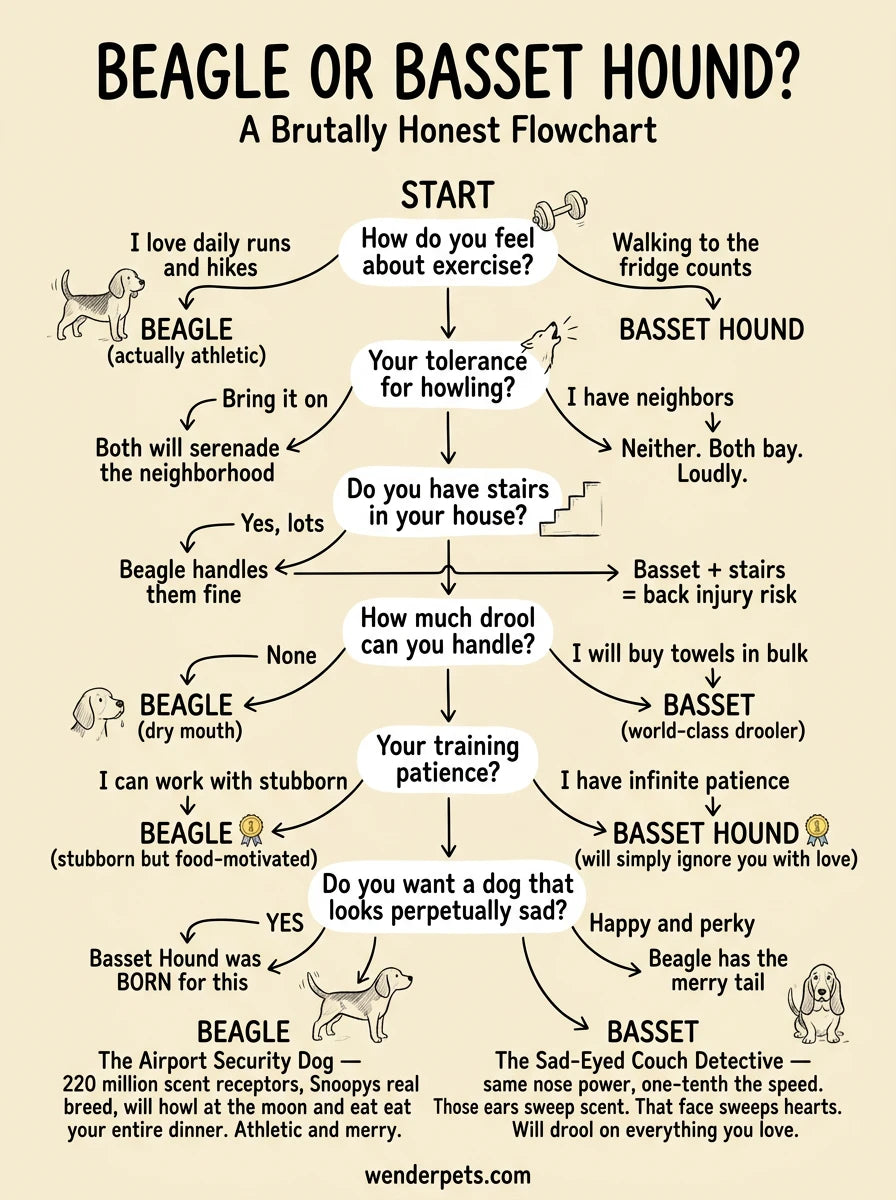
Choose a Beagle if you...
- • Want an active, merry adventure companion
- • Have kids who want a playmate
- • Can provide daily exercise and mental stimulation
- • Want a smaller, more portable hound
Choose a Basset Hound if you...
- • Prefer a laid-back, gentle companion
- • Don't want to run marathons with your dog
- • Love the droopy, soulful hound look
- • Want a dog that matches a relaxed lifestyle