Wender Pets
Here's a truth nobody in the dog world wants to admit: there's no such thing as a "perfect beginner dog." Every breed comes with trade-offs. Every single one.
But some breeds make those trade-offs a lot more manageable when you're figuring out this whole dog ownership thing for the first time. What follows is our honest ranking — not just "which dogs are nicest" but which dogs are most forgiving of the mistakes every first-time owner inevitably makes.
Because you will make mistakes. You'll forget a training cue. You'll accidentally reinforce bad behavior. You'll Google "is my dog dying" at 2 AM over something completely normal. A good first dog is one that still loves you through all of it.
What Makes a Good First Dog?
Before we rank specific breeds, here's what we're optimizing for:
- Forgiveness. A first dog should tolerate inconsistent training without developing behavioral problems.
- Clear communication. Some breeds are easy to read. Others are stoic or subtle. You want a dog whose body language screams rather than whispers.
- Moderate energy. Not so lazy you wonder if they're alive, not so wired you can't keep up.
- Sociability. Dogs that generally like other dogs and people make the learning curve less stressful.
- Health. Your first vet emergency shouldn't happen in month two.
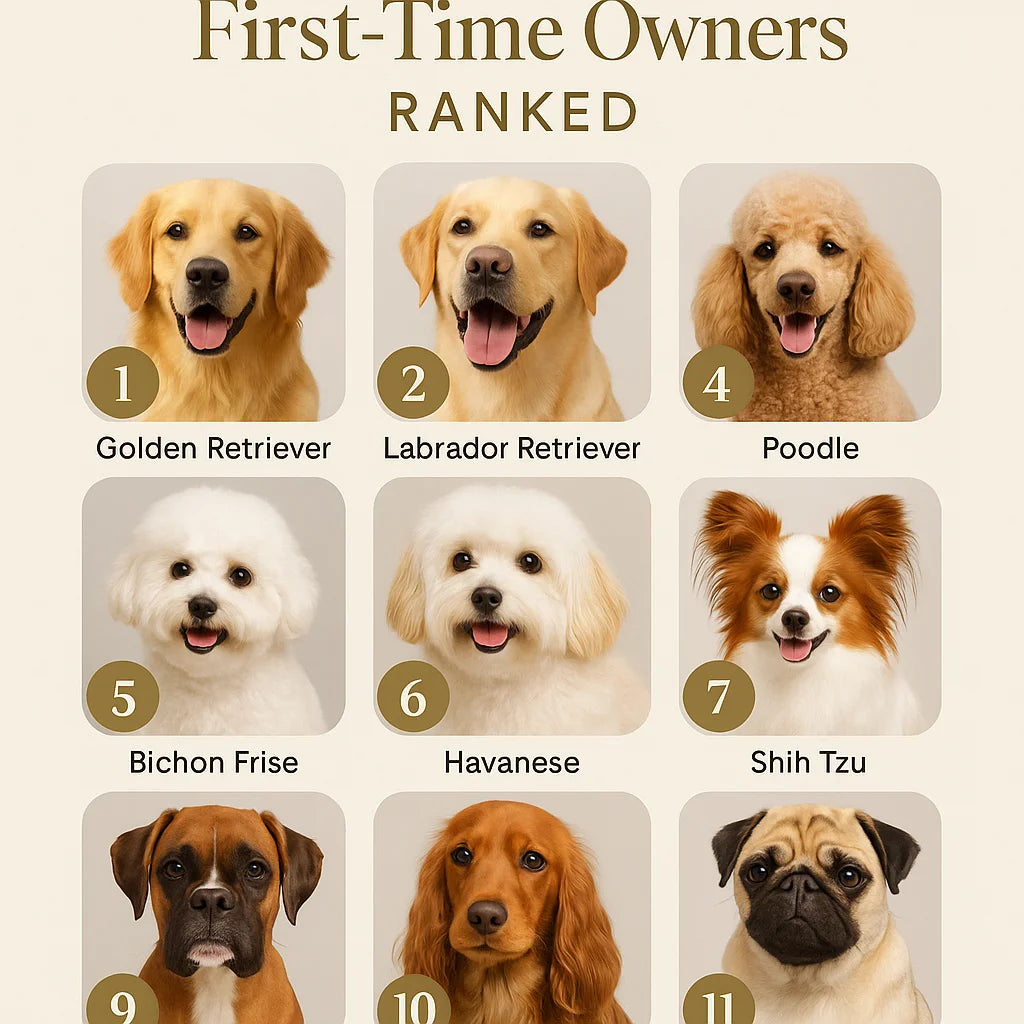
With that framework, here are our picks — in order.
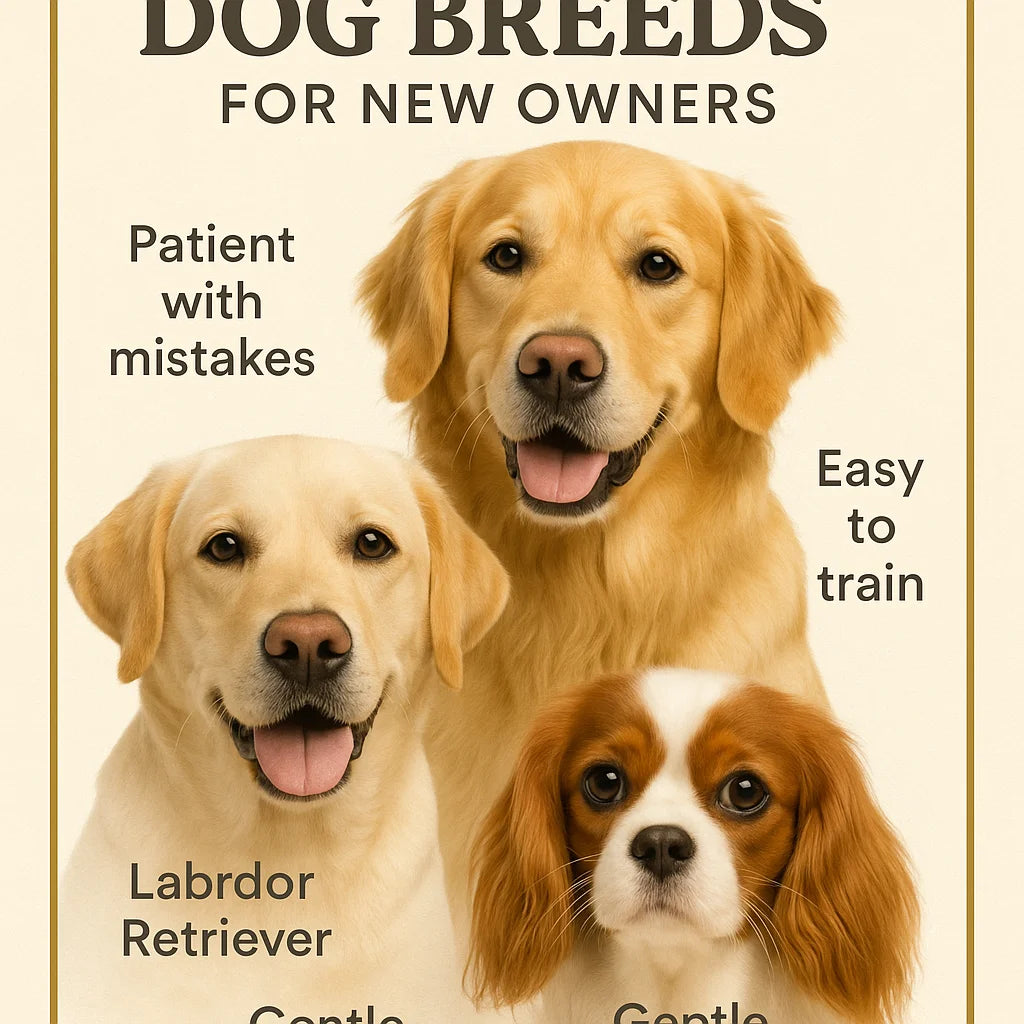
1. Golden Retriever — The Gold Standard (Literally)
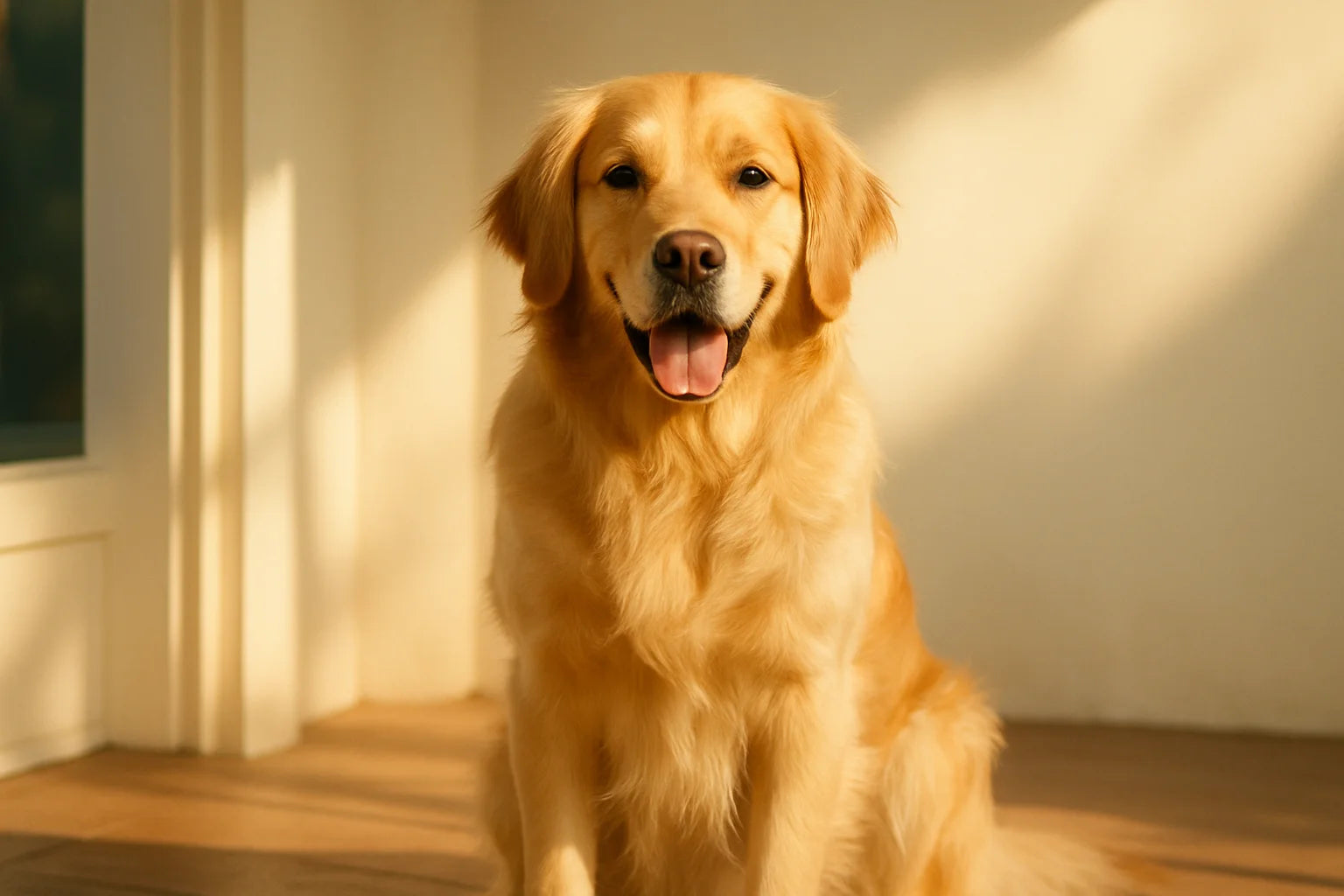
There's a reason Golden Retrievers top every "best first dog" list on the internet. They're not just friendly — they're pathologically eager to please. A Golden will forgive your training inconsistencies, tolerate your nervous energy, and greet every mistake with a wagging tail and a tennis ball.
Why they're great for beginners: Goldens communicate everything. Happy? You'll know. Bored? You'll absolutely know (goodbye, couch cushion). Their emotional transparency makes the learning curve gentler — you always know where you stand.
The honest catch: Goldens shed. Not a little. Not seasonally. Constantly. You will find golden fur in places that defy physics. They also have significantly elevated cancer rates — roughly 60% of Goldens will develop cancer. This isn't a dealbreaker, but it's a reality you should know going in. Budget for good pet insurance.
Energy level: Moderate to high. They need a solid hour of exercise daily, but they also have an excellent off-switch indoors.
Grooming reality: Brush twice a week minimum. Professional grooming every 6-8 weeks. Invest in a good vacuum — the $400 one, not the $80 one.
2. Labrador Retriever — The Unbreakable Buddy
The Labrador Retriever is America's most popular dog for a reason — actually, for about twelve reasons. Labs are bomb-proof. They're the Honda Civic of dogs: reliable, adaptable, and capable of handling whatever you throw at them.
Why they're great for beginners: Labs are almost impossible to genuinely offend. They bounce back from bad days, weird schedules, and training failures with zero grudges. They also tend to get along with essentially every living creature.
The honest catch: Labs are mouthy. As puppies, they chew everything — furniture, shoes, hopes, dreams. They're also food-obsessed to an almost clinical degree. Obesity is the number one health issue in Labs, and it will shorten their life significantly if you're not careful with portions.
Energy level: High, especially in the first two years. A young Lab with no exercise is a demolition crew with a tail.
Grooming reality: Easy coat, but they shed as much as Goldens. That double coat is relentless.
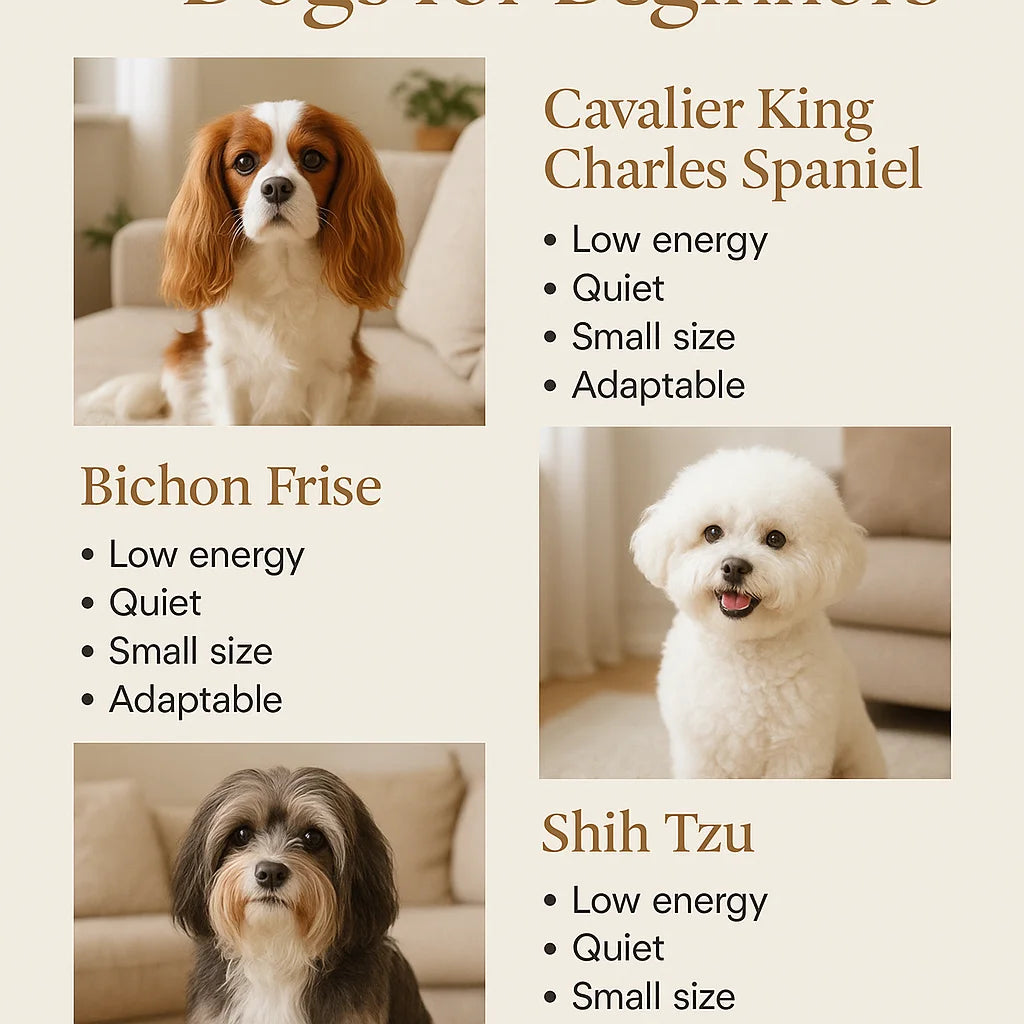
3. Cavalier King Charles Spaniel — The Perfect Apartment Dog
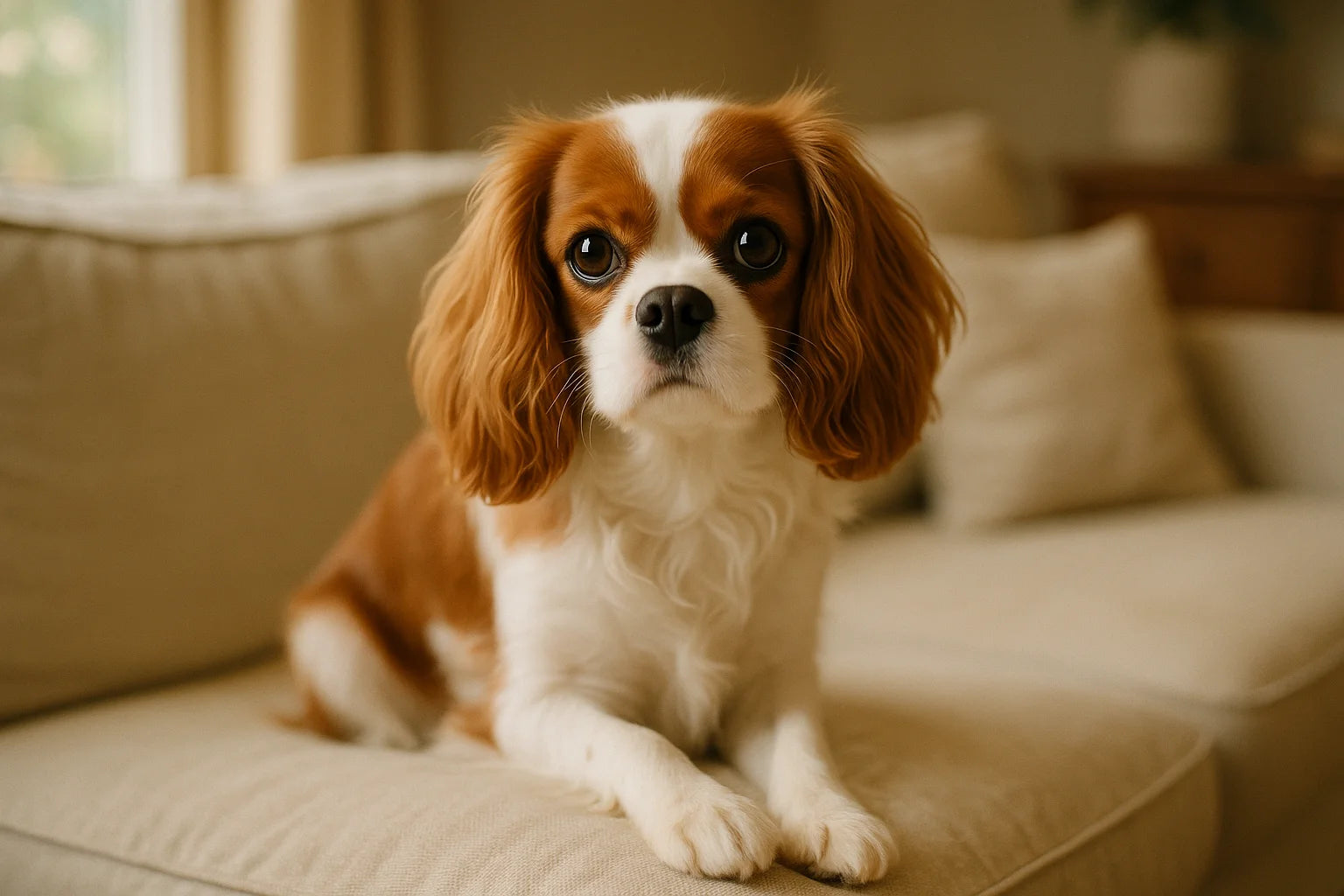
If a Golden Retriever is the all-purpose family SUV, the Cavalier King Charles Spaniel is the luxury sedan for smaller spaces. Cavaliers are gentle, affectionate, and genuinely happy to match your energy — whatever it is today.
Why they're great for beginners: Cavaliers are adaptable in a way few breeds manage. Active day? They're up for it. Netflix marathon? They're born for it. They read the room better than most people do.
The honest catch: Health. This is where Cavaliers break your heart. Mitral valve disease (a serious heart condition) affects a heartbreaking percentage of the breed. Syringomyelia is another concern. You absolutely must buy from a breeder who does cardiac testing, and even then, vet bills can be significant. This is not a "get pet insurance maybe" breed. This is a "get pet insurance immediately" breed.
Energy level: Low to moderate. Happy with a couple of 20-minute walks and some cuddle time.
Grooming reality: Moderate. Regular brushing, occasional professional grooming. Those ears need regular cleaning to prevent infections.
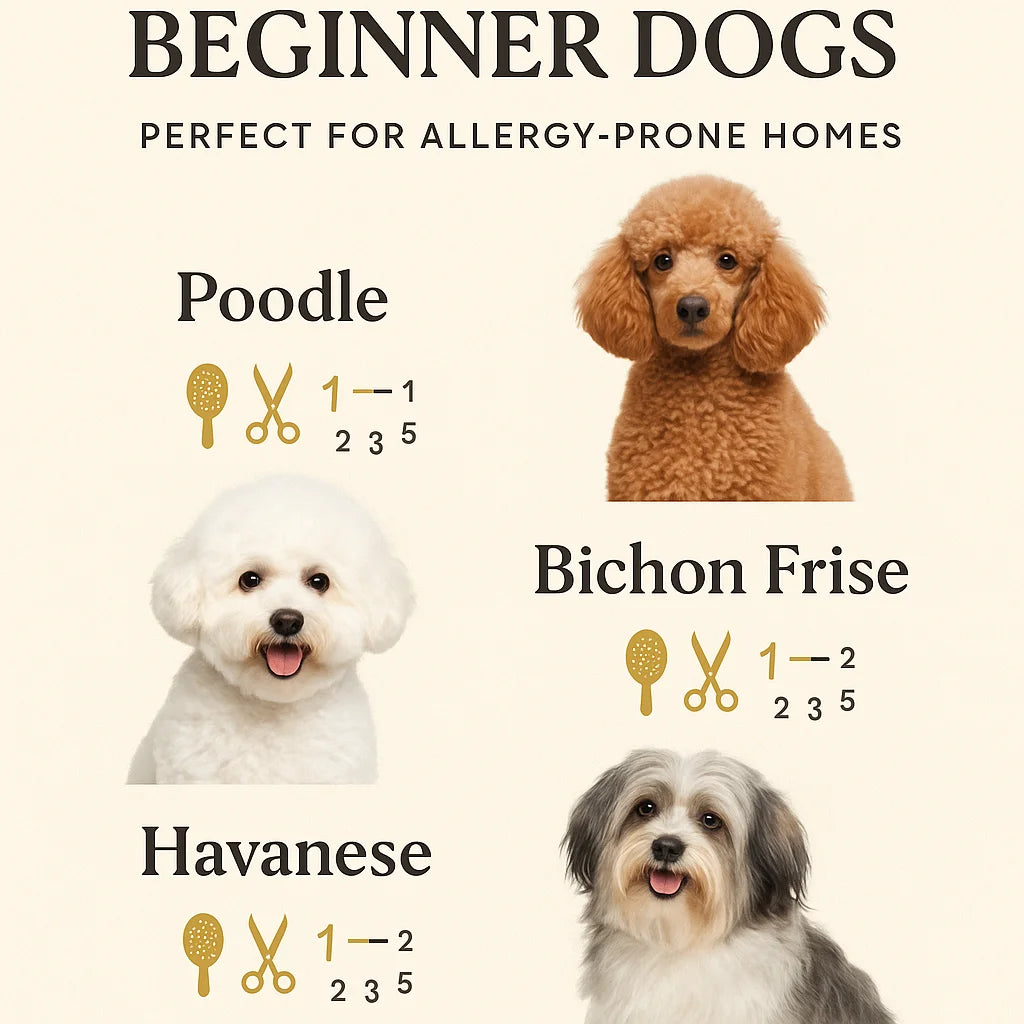
4. Poodle (Standard or Miniature) — The Secretly Athletic Genius
People write off Poodles because of the haircuts. Don't. Under that floof is one of the most intelligent, trainable, and athletic dogs alive. Poodles were originally duck retrievers — these are serious working dogs in a fancy package.
Why they're great for beginners: Poodles want to learn. Training sessions feel collaborative rather than confrontational. They pick up cues faster than most breeds and genuinely enjoy the process. For a first-time owner who's willing to put in training time, a Poodle will make you feel like a genius trainer.
The honest catch: That non-shedding coat? It still grows. Constantly. Professional grooming every 4-6 weeks is non-negotiable, and it's not cheap ($60-$100+ per session). Skip grooming and you'll end up with a matted mess that requires a full shave-down. Also: Poodles are sensitive. Harsh corrections will break their trust fast.
Energy level: Moderate to high (Standards are true athletes). Don't underestimate them.
Grooming reality: The most demanding on this list. Non-negotiable professional grooming. Budget $800-$1,200/year minimum.
5. Beagle — The Happy-Go-Lucky Scenthound
The Beagle is an honest dog. They're happy, sturdy, compact, and they'll tell you exactly what they're feeling — usually at considerable volume.
Why they're great for beginners: Beagles are hard to break. They're robust, generally healthy, and bounce back from training mistakes cheerfully. They're great with kids, great with other dogs, and small enough to manage physically while still being a "real dog."
The honest catch: The baying. Oh, the baying. Beagles are vocal — not barking exactly, but a distinctive howl that carries for blocks. If you have close neighbors or thin apartment walls, this matters. Also: their nose runs their brain. Once a Beagle locks onto a scent, recall training becomes theoretical. Never trust a Beagle off-leash in an unfenced area.
Energy level: Moderate. They need exercise but aren't demanding about the type — a good long walk and some sniff time will do.
Grooming reality: Minimal. Quick brush once a week. They're wash-and-wear dogs.
6. Bichon Frise — The Cheerful Cloud
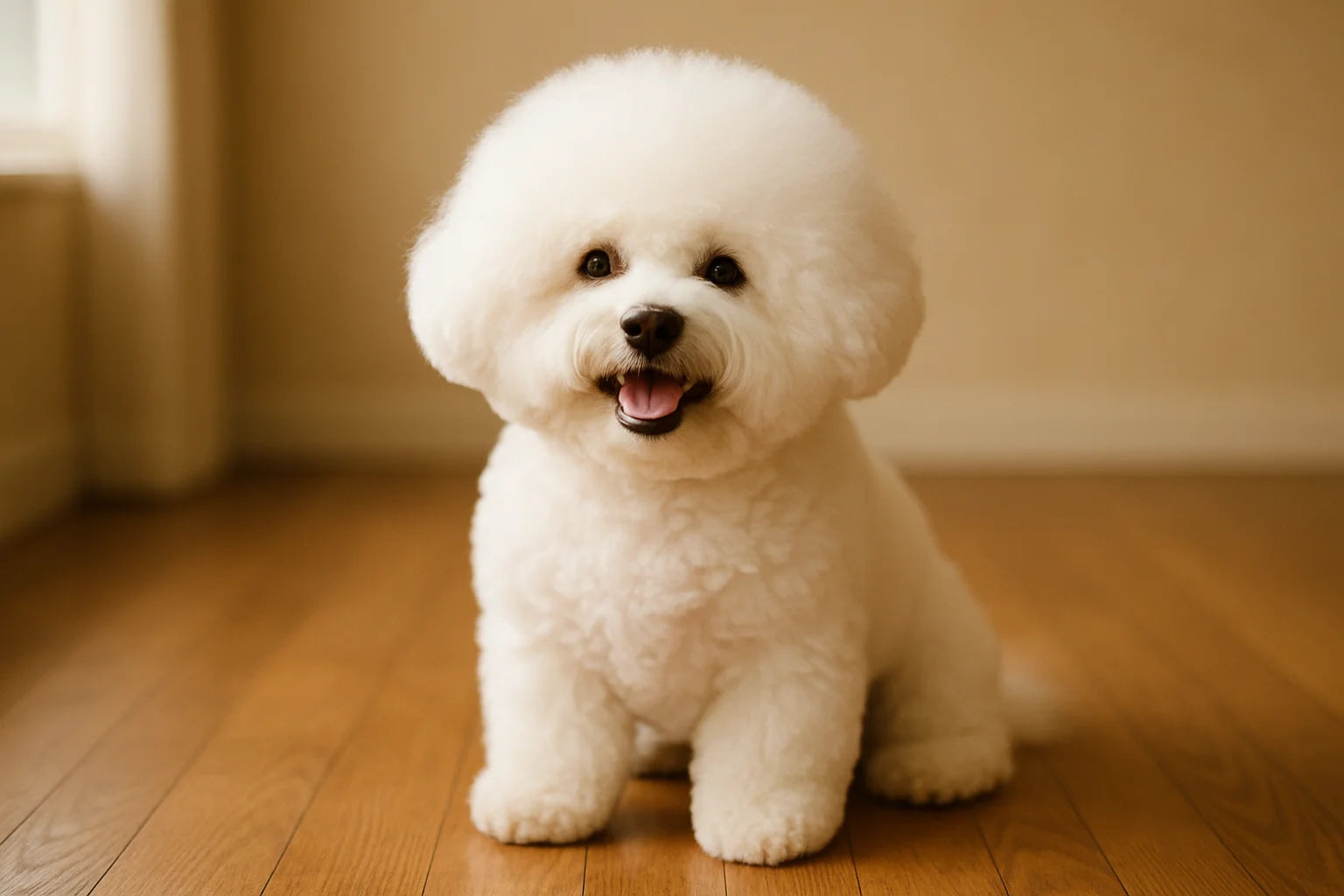
The Bichon Frise looks like a cotton ball that learned to walk, and they have a personality to match — relentlessly cheerful, social, and determined to make everyone in the room smile.
Why they're great for beginners: Bichons are sturdy for their size, hypoallergenic-ish (low shedding), and adaptable to apartment life. They're also natural performers — they love learning tricks and showing off, which makes training feel like fun instead of homework.
The honest catch: Separation anxiety can be significant. Bichons bond hard, and being left alone for long stretches can lead to destructive behavior and distress barking. If you work long hours in an office, this is not your breed. Housetraining can also take longer than average — patience is required.
Energy level: Moderate. Playful but not exhausting.
Grooming reality: High. Like Poodles, that non-shedding coat needs professional grooming every 4-6 weeks. Daily brushing prevents mats.
7. Boxer — The Eternal Puppy
The Boxer is the class clown of the dog world — a muscular goofball who somehow never grows up emotionally, even when they're 70 pounds of pure enthusiasm.
Why they're great for beginners: Boxers are transparent. Every emotion is written across their (adorable, wrinkly) face. They're great with kids, naturally protective without being aggressive, and they'll turn every walk into an adventure. Their loyalty borders on obsession — in the best way.
The honest catch: That puppy energy lasts about three years. Three years of "I'm going to bounce off every surface." Boxers also have a shorter lifespan than average (8-10 years) and are prone to cancers, heart conditions, and hip dysplasia. They overheat easily in summer — they're brachycephalic, which means that flat face isn't just cute, it's a breathing limitation.
Energy level: High. Very high. They need serious daily exercise and mental stimulation.
Grooming reality: Minimal. Short coat, easy to maintain. They do drool, though.
8. Cocker Spaniel — The Gentle Athlete
The Cocker Spaniel is what happens when you cross sporting dog drive with lapdog sweetness. They're active enough to keep up with an outdoorsy lifestyle but calm enough to snuggle on the couch afterward.
Why they're great for beginners: Cockers are people-oriented to their core. They want to be near you, they want to please you, and they pick up on your moods with almost eerie accuracy. Training is generally smooth because they're motivated by both treats and approval.
The honest catch: Ear infections. Those gorgeous, floppy ears trap moisture like nobody's business. Budget for regular ear cleaning supplies and potentially frequent vet visits for chronic ear issues. Some Cockers also develop "rage syndrome" — sudden, unprovoked aggression — though this is rare and associated with specific breeding lines. Buy from a reputable breeder.
Energy level: Moderate. They're sportier than they look but adapt well to moderate exercise routines.
Grooming reality: High. That silky coat mats quickly without regular brushing, and professional grooming every 6-8 weeks is standard.
9. Papillon — The Small Dog That Acts Like a Big Dog
Don't let the butterfly ears and five-pound frame fool you — the Papillon is one of the most trainable and athletic dogs of any size. They consistently rank in the top 10 for intelligence across all breeds.
Why they're great for beginners: Papillons are big-dog brains in a toy-dog body. They're eager learners, excellent in agility, and they don't have the "I'm too good for training" attitude that plagues some small breeds. They're also healthier and longer-lived than most toy breeds — 14-16 years is common.
The honest catch: They're fragile. A Papillon and a toddler is a risky combination — these are delicate dogs that can be seriously injured by rough handling. They can also be barky, and their confidence sometimes outpaces their size in ways that create problems with larger dogs.
Energy level: Moderate to high for their size. They need more exercise and stimulation than most toy breeds.
Grooming reality: Surprisingly easy. Despite the long coat, Papillons don't have an undercoat, so matting is minimal. Brush a couple times a week and you're good.
10. Bernese Mountain Dog — The Gentle Giant
The Bernese Mountain Dog is 100 pounds of pure sweetness. They're calm, affectionate, and they have a natural gentleness that makes them wonderful with children and other pets.
Why they're great for beginners: Berners are patient. Patient with training, patient with kids, patient with your fumbling attempts to clip their nails. They're not high-strung, they don't require extreme exercise, and their default setting is "contentedly existing near their people."
The honest catch: Lifespan. This is the painful one. Bernese Mountain Dogs live an average of 6-8 years. Cancer, particularly histiocytic sarcoma, is devastatingly common in the breed. You will likely lose your Berner too young, and that's a heartbreak you should go in with eyes open. Health costs can also be significant.
Energy level: Low to moderate. They like walks and outdoor time but aren't demanding.
Grooming reality: Heavy shedding, especially seasonal. That thick double coat needs regular brushing — three times a week minimum.
11. Havanese — The Hypoallergenic Companion
Cuba's national dog, the Havanese is a small, sturdy companion that was literally bred to be a family dog. No hunting drive, no herding instinct — just a deep, abiding desire to be wherever you are.
Why they're great for beginners: Havanese are remarkably well-rounded. They're social without being needy, playful without being hyperactive, and they get along with practically everyone — kids, cats, strangers, the UPS driver. They're also low-shedding, which is a genuine quality-of-life upgrade for allergy sufferers.
The honest catch: Like Bichons, separation anxiety is real. Havanese are Velcro dogs — they want to follow you everywhere, including the bathroom. If you're gone 10 hours a day, both of you will be miserable. They also require consistent grooming to prevent their silky coat from becoming a nightmare.
Energy level: Low to moderate. Perfectly happy with daily walks and indoor play.
Grooming reality: Moderate to high. Regular brushing and professional grooming every 6-8 weeks. Many owners opt for a short "puppy cut" to simplify maintenance.
12. Shih Tzu — The Ancient Lapdog
The Shih Tzu has been perfecting the art of companionship for over a thousand years. Originally bred for Chinese royalty, their sole job description has always been "be adorable and provide comfort." They're extremely good at it.
Why they're great for beginners: Shih Tzus are genuinely low-maintenance in terms of exercise and mental stimulation. They're happy with short walks and lots of couch time. They're also charming, affectionate, and less prone to anxiety than some other small breeds.
The honest catch: Stubbornness. Shih Tzus know what they want, and training can feel more like a negotiation than an education. Housetraining is notoriously slow — many owners eventually use indoor pee pads as a permanent solution. They also have brachycephalic issues (breathing, overheating) and those big eyes are prone to injuries and infections.
Energy level: Low. Very low. These dogs were bred for palace life and they remember it.
Grooming reality: High if you keep the coat long. Professional grooming every 4-6 weeks. Most pet owners keep them in a short cut, which is much more manageable.
The Bottom Line
There's no "wrong" choice on this list — every breed here will reward you with love, companionship, and the kind of unconditional devotion that makes dog ownership one of life's great pleasures.
But the right choice depends on your honest assessment of your lifestyle. Live in an apartment? Skip the Lab, consider the Cavalier. Gone long hours? The Bichon and Havanese will struggle. Want a jogging buddy? The Papillon or Poodle has you covered. Have very young kids? Prioritize sturdiness — Golden, Lab, or Beagle.
The best first dog isn't the most popular one. It's the one whose trade-offs match what you can handle.