Wender Pets
The Dachshund and the Pembroke Welsh Corgi are both short-legged, long-bodied dogs with outsized personalities. Both are internet darlings. Both have that distinctive waddle that makes people smile involuntarily.
But these two low-riders were built for completely different jobs — and that heritage creates surprisingly different companion experiences.
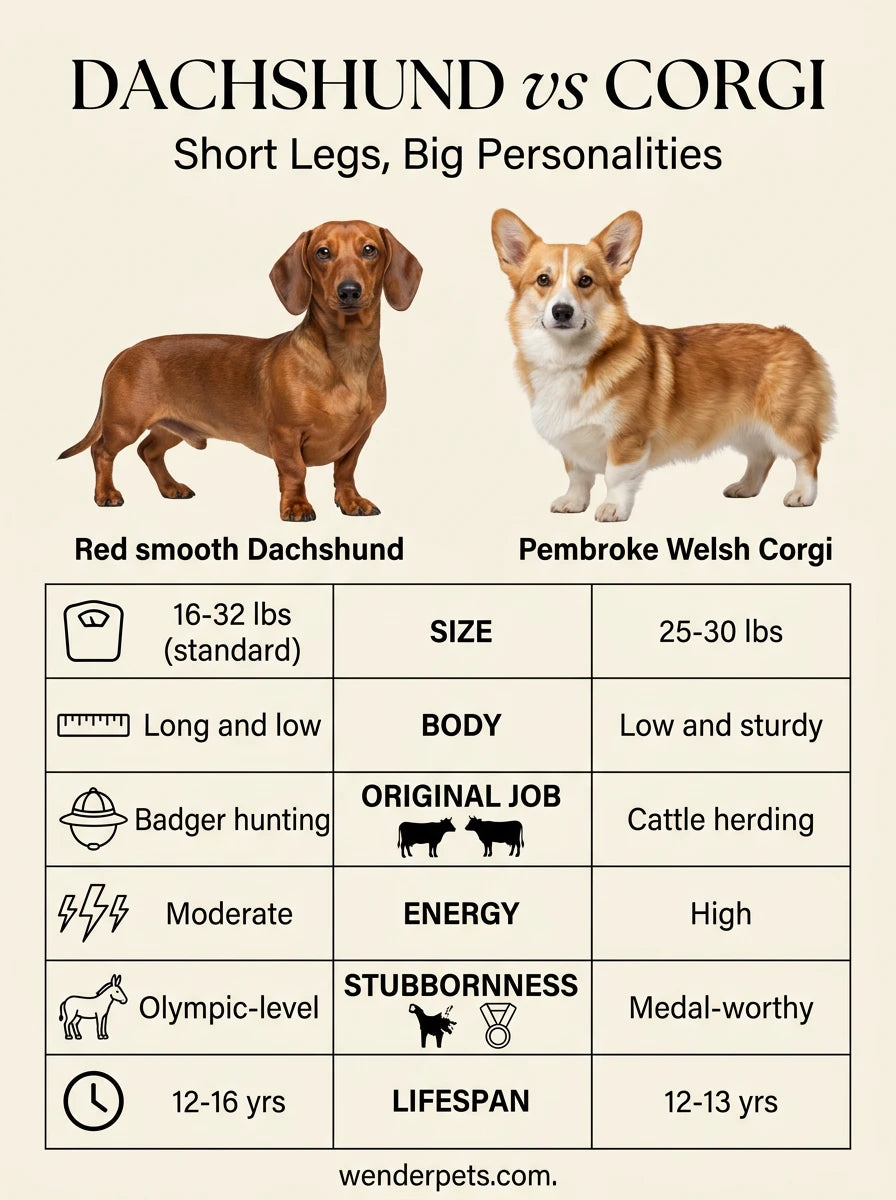
The Quick Comparison
🌭 Dachshund
- Weight: 11-32 lbs (standard); under 11 lbs (mini)
- Built for: Hunting badgers underground
- Personality: Bold, stubborn, fiercely loyal
- Energy: Moderate — bursts of activity
- Barking: Significant — alert and territorial
- Lifespan: 12-16 years
👑 Pembroke Welsh Corgi
- Weight: 25-30 lbs
- Built for: Herding cattle
- Personality: Outgoing, intelligent, bossy
- Energy: High — needs real exercise
- Barking: Significant — herding instinct
- Lifespan: 12-15 years
The Hunter vs The Herder
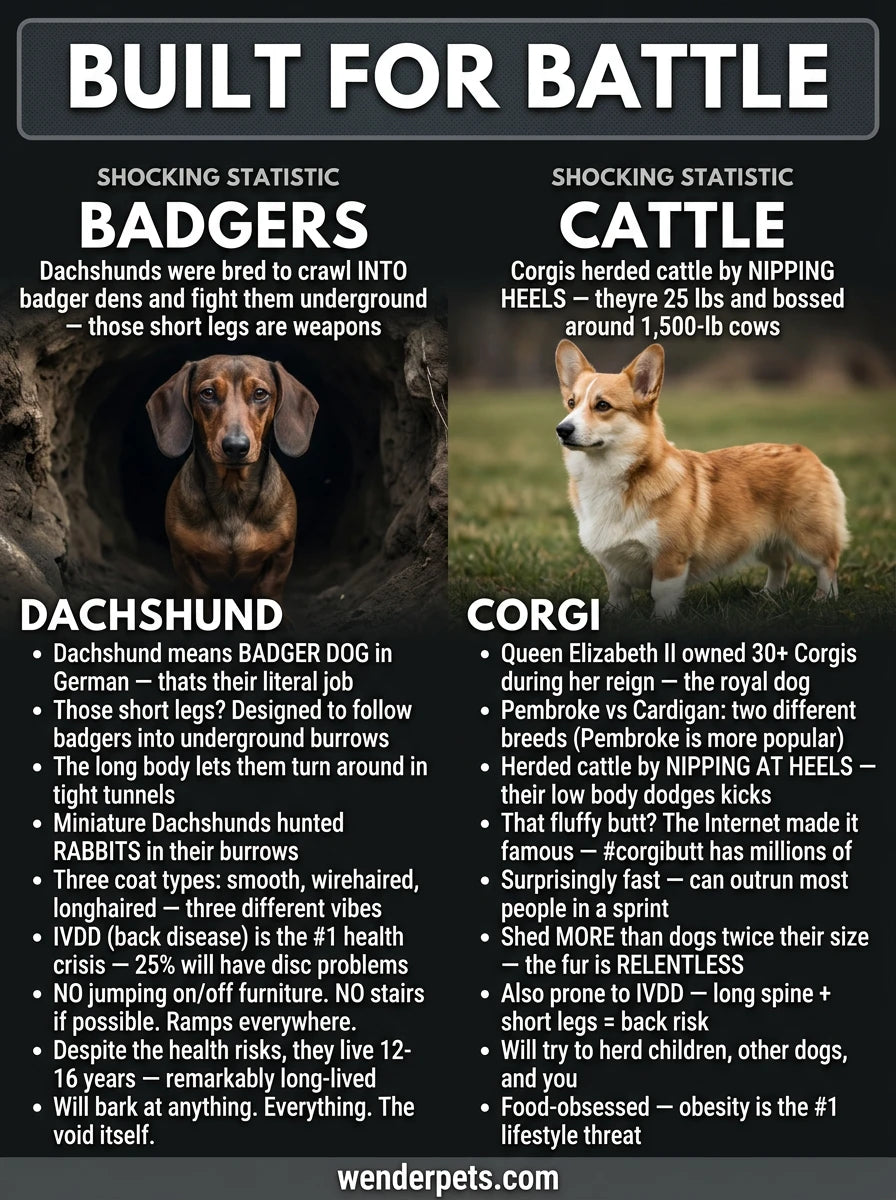
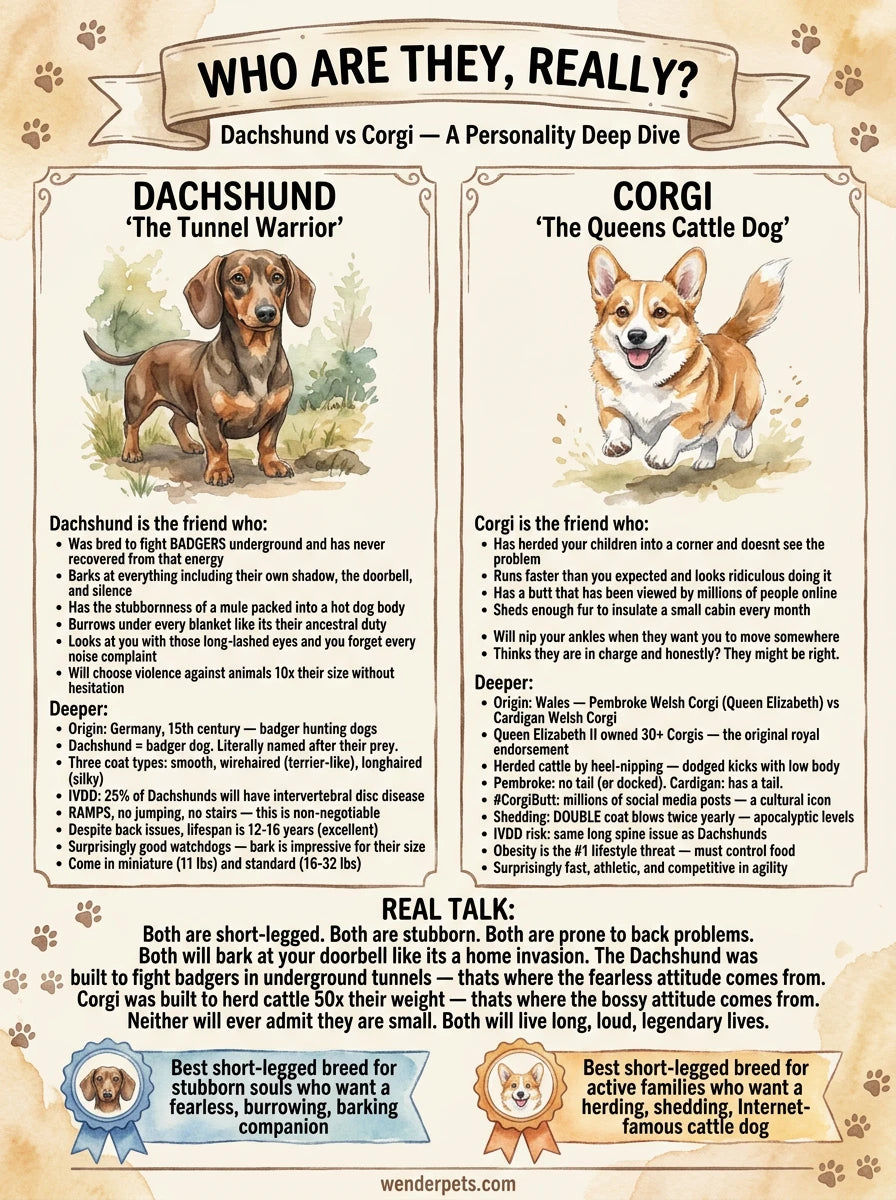
A Dachshund was bred to follow badgers into underground tunnels — alone, in the dark, against an animal that fights back. This required a dog with extraordinary courage, independence, and stubbornness. When a Dachshund decides something, they are not open to discussion.
A Corgi was bred to herd cattle by nipping at their heels — working as a team with their owner, responding to commands, managing animals ten times their size. This required intelligence, boldness, and the willingness to take direction (at least some of the time).
The practical difference: Corgis are more trainable. They want to work with you. Dachshunds respect your opinion but reserve the right to overrule it.
Energy Levels
This is where the comparison gets interesting. Despite their similar builds, their energy profiles are very different:
Dachshunds are moderate-energy dogs. They enjoy walks and play sessions but are equally content to burrow under a blanket and nap for hours. They're adaptable to apartment living and don't require exhausting amounts of exercise.
Corgis are high-energy dogs in a deceptively small package. They were bred to run alongside cattle all day, and they still have that stamina. A Corgi needs 1-2 hours of exercise daily plus mental stimulation. Underexercised Corgis become barky, nippy, and creatively destructive.
The Back Problem
⚠️ IVDD Warning — Both Breeds
Both breeds are prone to intervertebral disc disease (IVDD) due to their long spines and short legs. Dachshunds are especially at risk — IVDD affects up to 25% of Dachshunds. Prevention includes: keeping them at a healthy weight, using ramps instead of stairs, avoiding jumping on/off furniture, and supporting their back when picking them up. Surgery for severe IVDD can cost $5,000-10,000.
The Herding Instinct at Home
Corgis will try to herd your children, your cats, your guests, and occasionally your feet. This manifests as circling, nipping at ankles, and barking to direct movement. It's instinct, not aggression — but it needs to be managed, especially around small children.
Dachshunds don't herd, but they do hunt. They'll chase squirrels with alarming determination, dig holes in your yard to "find" underground critters, and tunnel under every blanket in the house. Their prey drive is strong and their digging instinct is real.
Health Comparison
Dachshund Health Watch
- • IVDD (intervertebral disc disease) — major
- • Obesity (compounds back problems)
- • Dental disease
- • Patellar luxation
- • Progressive retinal atrophy
Corgi Health Watch
- • IVDD (less common than Dachshunds)
- • Hip dysplasia
- • Degenerative myelopathy
- • Von Willebrand's disease
- • Obesity (food-motivated)
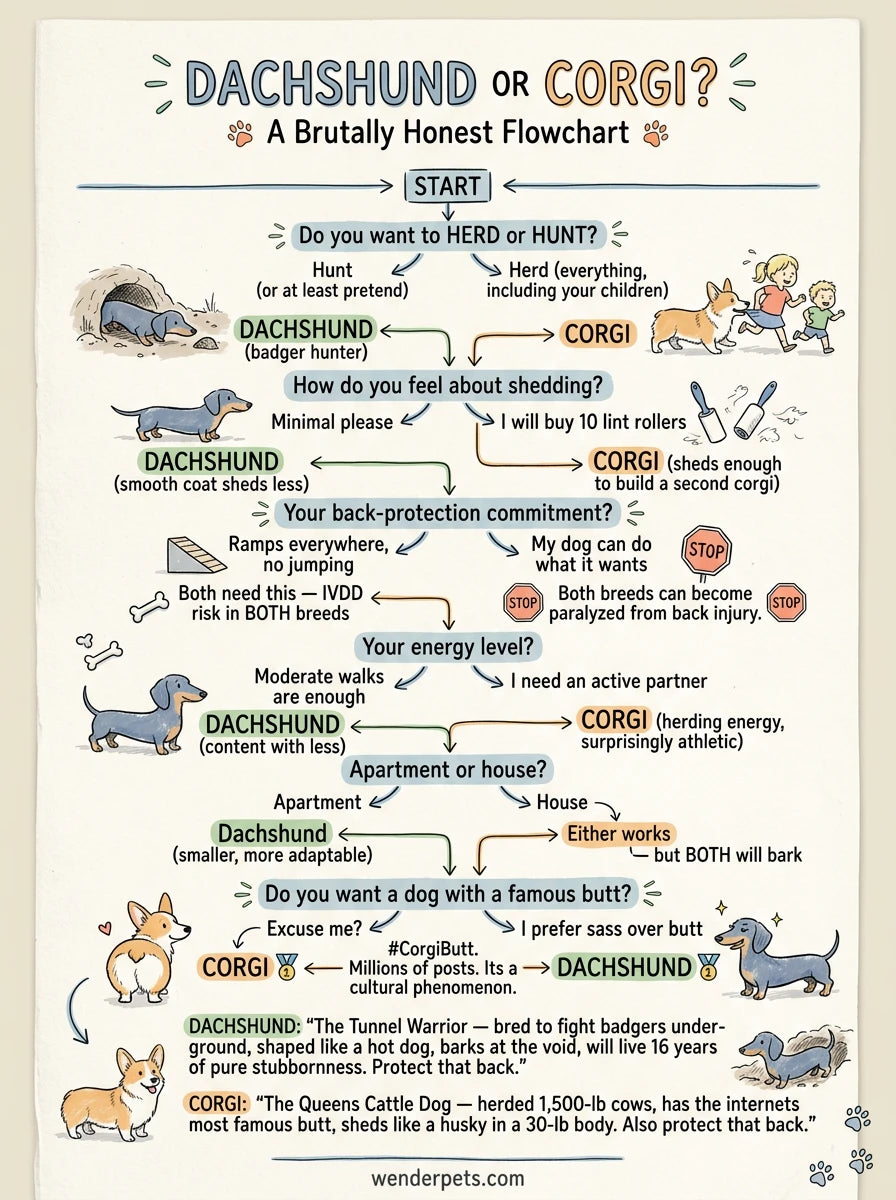
The Verdict
Choose a Dachshund if you...
- • Want a bold, loyal companion with moderate energy
- • Live in an apartment or smaller space
- • Appreciate independence and personality in a small package
- • Don't mind a dog that thinks it's the boss (because it is)
Choose a Corgi if you...
- • Want an active, trainable family dog
- • Can provide 1-2 hours of daily exercise
- • Want a dog that's smart and eager to learn
- • Don't mind herding behavior (and can manage nipping)