Wender Pets
Every dog owner has that moment — the casual Google search after their dog ate something questionable, followed by either relief or full panic mode. We've all been there.
The tricky thing about toxic foods is that "toxic" covers a huge range. Some foods will cause mild stomach upset. Others can shut down your dog's kidneys in 48 hours. And a few common items in your kitchen are so dangerous that even small amounts constitute a genuine emergency.
This guide separates the truly dangerous from the merely unpleasant, gives you actual numbers (not just "it's bad"), and tells you exactly what to do if your dog gets into something they shouldn't.
🚨 Emergency Contact
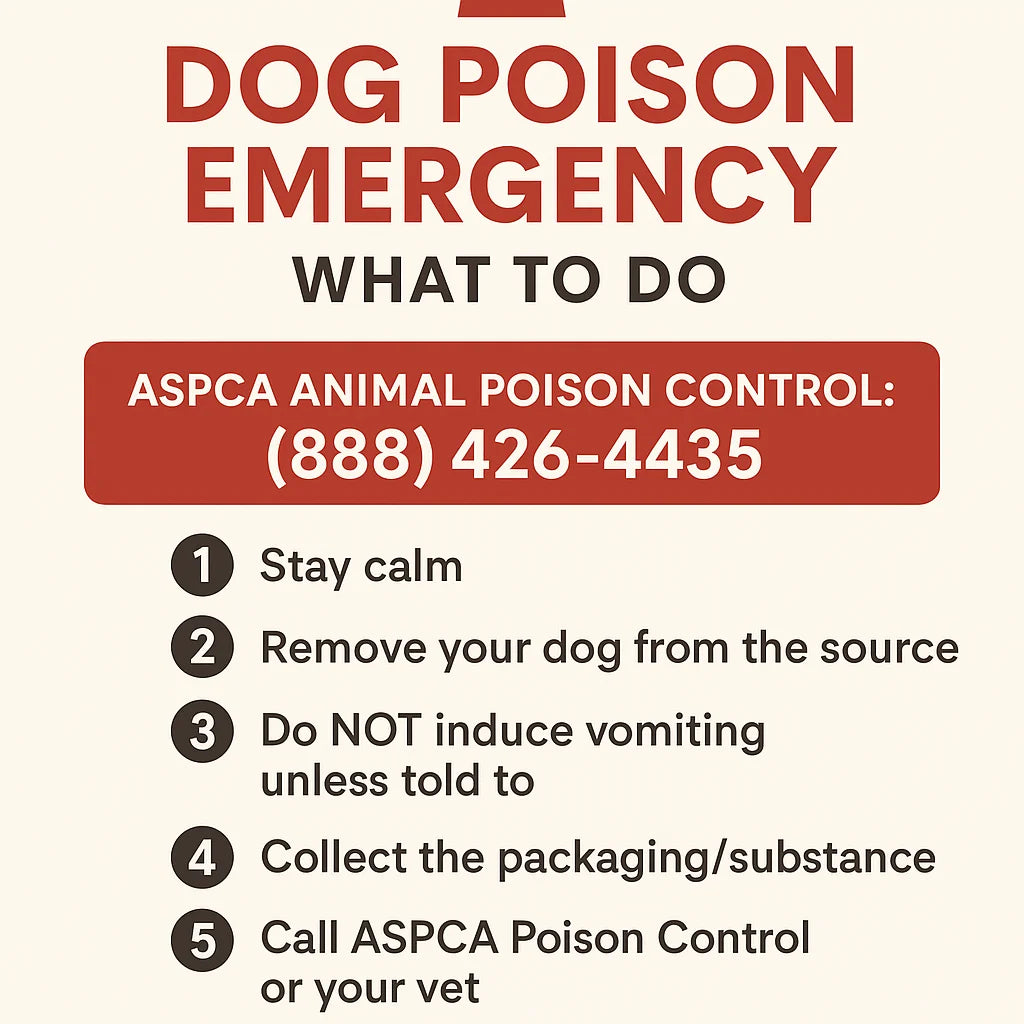
If your dog has eaten something toxic:
ASPCA Poison Control: (888) 426-4435
Available 24/7. There may be a $95 consultation fee. They can advise your vet in real-time.
Do NOT induce vomiting unless instructed by a professional. Some substances cause more damage coming back up.
🔴 Immediately Dangerous: These Can Kill

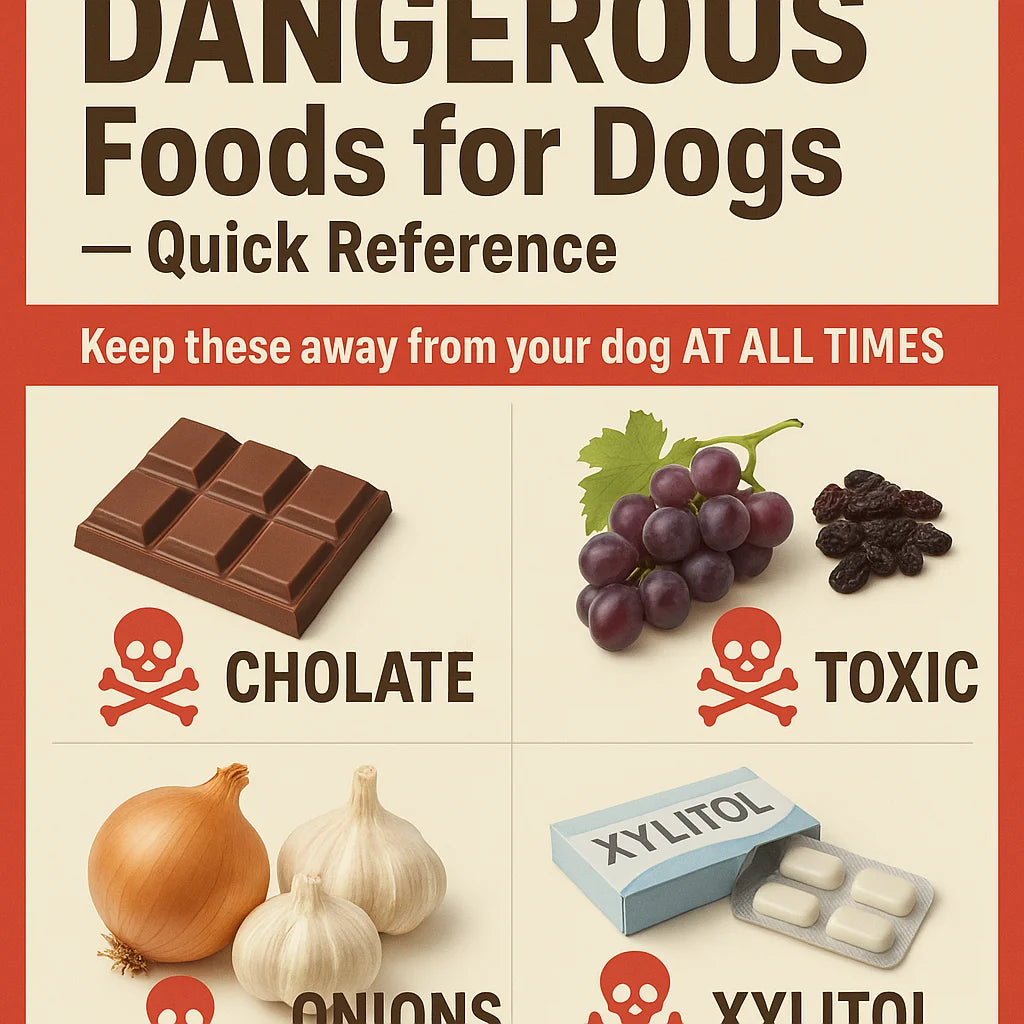
Chocolate
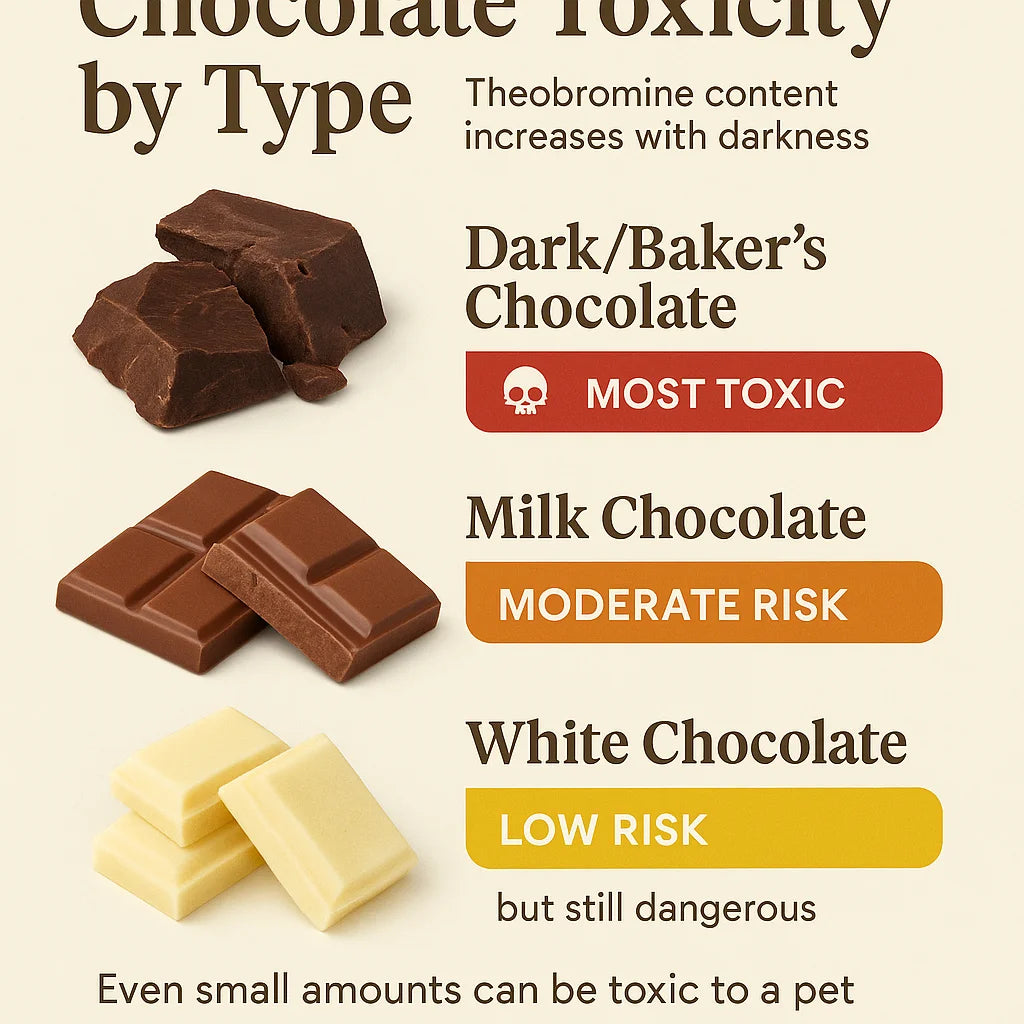
The most famous dog toxin, and the one people most frequently underestimate. Chocolate contains theobromine, which dogs metabolize extremely slowly. The darker the chocolate, the more dangerous it is.
How much is actually dangerous?
- White chocolate: Very low theobromine — you'd need an absurd amount to cause toxicity. Still not recommended.
- Milk chocolate: Roughly 1 ounce per pound of body weight is the danger zone. A 50-lb dog would need about 50 oz (3+ lbs) of milk chocolate for serious toxicity. Not impossible if they find a Halloween stash.
- Dark chocolate: Much more concentrated. 1 ounce per 3 pounds of body weight can be dangerous. That same 50-lb dog could be in trouble from just 1 pound of dark chocolate.
- Baker's chocolate / cocoa powder: Extremely concentrated. As little as 0.5 ounces per pound of body weight is dangerous. This is the real emergency.
Symptoms: Vomiting, diarrhea, rapid breathing, elevated heart rate, seizures. Symptoms can take 6-12 hours to appear.
What to do: Call your vet or ASPCA Poison Control immediately. Time matters — treatment is most effective within the first few hours.
Xylitol (Birch Sugar / Sugar Alcohol)
This one is genuinely terrifying. Xylitol is an artificial sweetener found in sugar-free gum, some peanut butters, toothpaste, sugar-free candy, and baked goods. In dogs, it causes a massive insulin release that crashes blood sugar to life-threatening levels within 10-60 minutes.
How much is dangerous? As little as 0.1 grams per kilogram of body weight can cause hypoglycemia. A single piece of sugar-free gum can contain 0.3-1.5 grams of xylitol — enough to be dangerous to a small dog.
At higher doses: Xylitol causes liver failure, which can be fatal within 24-48 hours.
Symptoms: Vomiting, lethargy, loss of coordination, seizures, collapse. Can appear within minutes.
What to do: This is a drop-everything emergency. Get to an emergency vet immediately. Do not wait for symptoms.
Grapes and Raisins
This is the most frustrating entry on the list because nobody fully understands why grapes are toxic to dogs. Some dogs eat grapes with no issues. Others develop acute kidney failure from a handful. There's no reliable way to predict which dogs are sensitive.
How much is dangerous? There is no established safe amount. Some dogs have developed kidney failure from as few as 4-5 grapes. Raisins are more concentrated and potentially more dangerous by weight.
Symptoms: Vomiting (often within hours), lethargy, decreased urination (a sign of kidney failure), and eventually anuria (no urination at all).
What to do: Vet immediately. Every grape counts as potentially serious.
Onions, Garlic, and Alliums
All members of the allium family — onions, garlic, leeks, shallots, chives — contain compounds that damage red blood cells in dogs, leading to hemolytic anemia. The damage is cumulative, which means small amounts over time can be just as dangerous as one large exposure.
How much is dangerous? Onions: roughly 0.5% of body weight in a single meal can cause toxicity. For a 50-lb dog, that's about 4 ounces of onion — easily found in leftover soup or takeout food. Garlic is more concentrated — roughly 5x more toxic than onion by weight.
Why this matters: Onion and garlic are in everything. Soups, sauces, baby food, pizza, Chinese takeout, the marinade on that steak. If you share human food with your dog, you're probably giving them more alliums than you realize.
Symptoms: May not appear for 3-5 days. Lethargy, pale gums, red or brown urine, weakness.
Macadamia Nuts
Another mystery toxin — the exact mechanism isn't well understood, but macadamia nuts are clearly toxic to dogs. The good news: fatalities are extremely rare. The bad news: even non-fatal cases are miserable.
How much is dangerous? As little as 2.4 grams per kilogram of body weight — a small handful for most dogs.
Symptoms: Weakness (especially in hind legs), vomiting, tremors, hyperthermia. Usually appears within 12 hours and resolves within 48 hours with treatment.
Alcohol
This seems obvious, but it's not just beer and wine. Unbaked bread dough produces ethanol as it ferments in the stomach, and rum-soaked desserts, vanilla extract, and even some cough syrups contain enough alcohol to be dangerous.
How much is dangerous? Dogs are far more sensitive to alcohol than humans. A few tablespoons of whiskey can be dangerous for a small dog. The lethal dose is approximately 5.5 ml of ethanol per kilogram of body weight.
Symptoms: Vomiting, disorientation, difficulty breathing, coma. In severe cases: death.
⚠️ Sneaky Dangers: Less Obvious, Still Serious
Avocado
Avocados contain persin, a toxin that's concentrated in the leaves, pit, and skin. The flesh contains lower amounts. For most dogs, eating a small amount of avocado flesh will cause mild GI upset at worst. The bigger danger is the pit — it's a perfect size for intestinal obstruction.
Risk level: Low to moderate. Not the emergency that chocolate or xylitol represent, but not a snack to encourage.
Cooked Bones
Raw bones are generally safe (and beneficial for dental health). Cooked bones are dangerous. Cooking makes bones brittle, meaning they splinter into sharp fragments that can puncture the esophagus, stomach, or intestines.
The worst offenders: Cooked chicken bones, cooked rib bones, cooked turkey bones. Basically, anything left over from dinner.
Caffeine
Similar mechanism to chocolate (caffeine is a methylxanthine, like theobromine). Coffee grounds, tea bags, energy drinks, and caffeine pills are all dangerous. Dogs are more sensitive to caffeine than humans — a few laps of coffee aren't an emergency, but eating coffee grounds or a caffeine pill absolutely is.
Salt (in Large Amounts)
A few salty fries won't hurt your dog. But large amounts of salt — rock salt, homemade play dough (a common culprit), or salt water — can cause sodium ion poisoning, which leads to vomiting, diarrhea, tremors, and seizures.
Raw Yeast Dough
Bread dough rises in your dog's stomach, causing painful bloating. Worse, the fermenting yeast produces ethanol, essentially turning your dog's stomach into a tiny brewery. Bloat + alcohol poisoning = emergency vet trip.
✅ Safe Treats: What You CAN Share
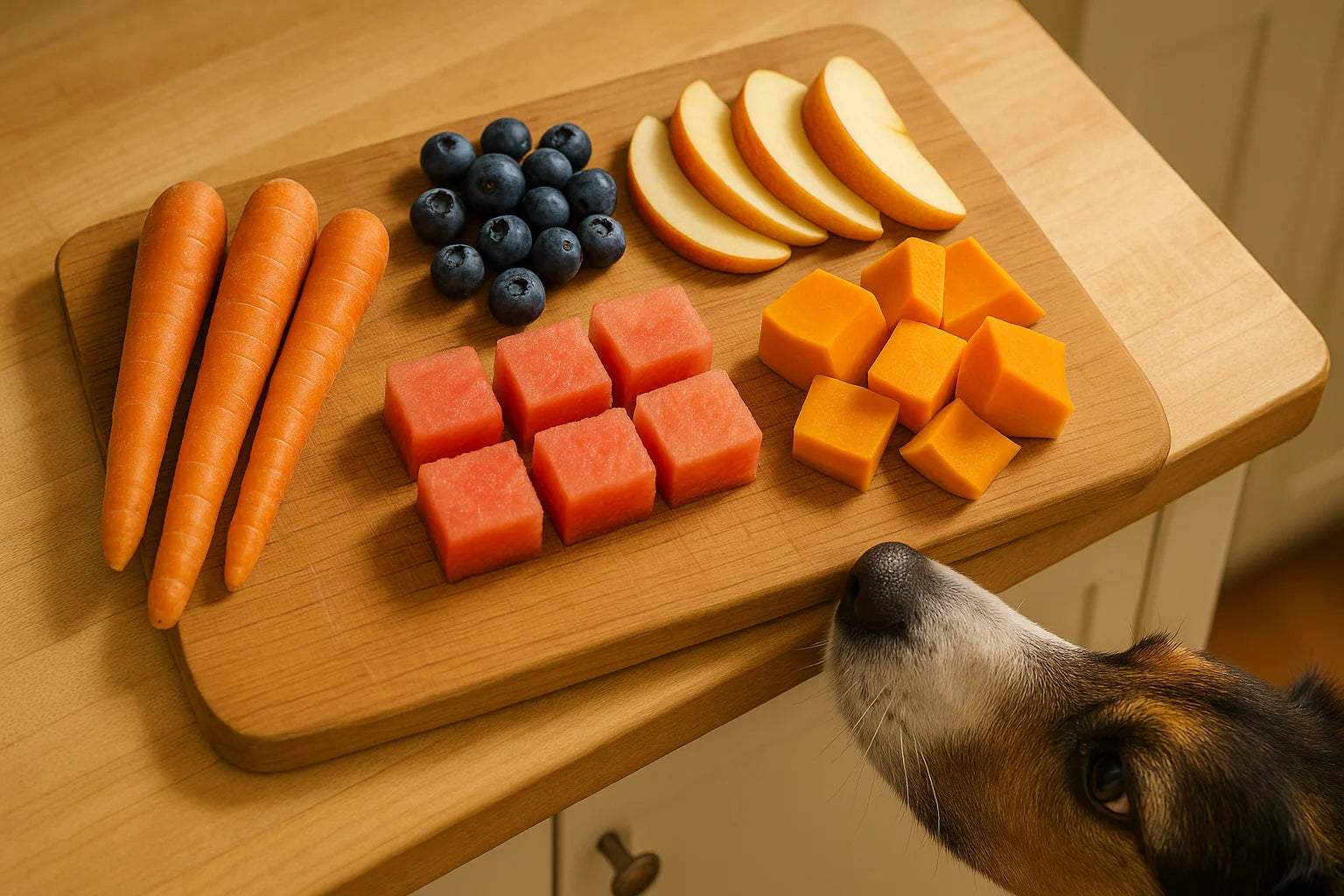
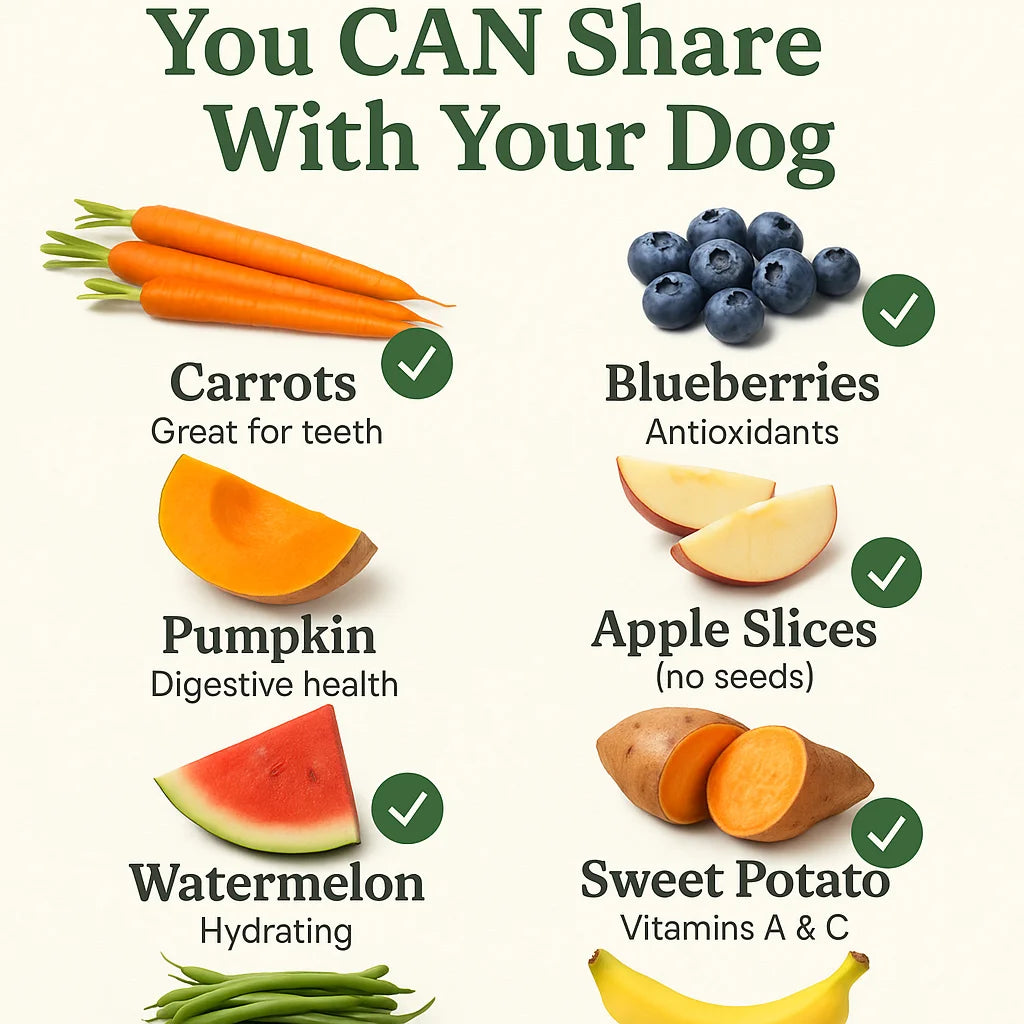
It's not all bad news. Plenty of human foods are not just safe for dogs — they're genuinely good for them. Here are the treats you can share guilt-free:
🐾 Safe Human Foods for Dogs
Low calorie, great for teeth, and most dogs love the crunch. Serve raw or lightly steamed.
Packed with antioxidants. Perfect training treats — small, low calorie, and dogs go crazy for them.
The miracle food for dog digestion. Helps with both diarrhea and constipation. Make sure it's plain pumpkin — NOT pumpkin pie filling (which contains spices and sugar).
Remove seeds and core first (apple seeds contain trace cyanide). The flesh is safe, crunchy, and a good source of fiber.
Remove seeds and rind. The flesh is hydrating, low calorie, and perfect for hot summer days. Many dogs love frozen watermelon chunks.
High in potassium and vitamins. Great in moderation — they're also high in sugar, so don't overdo it.
Almost zero calories, high water content. Ideal treat for dogs on a diet.
What to Do in an Emergency
If your dog eats something toxic, here's your action plan:
🏥 Emergency Checklist
- 1 Stay calm. Panicking doesn't help your dog, and it makes you less effective.
- 2 Identify what they ate. Save the packaging, take a photo, note the approximate amount consumed.
- 3 Call ASPCA Poison Control: (888) 426-4435 or your vet/emergency vet. Have your dog's weight and the substance information ready.
- 4 Do NOT induce vomiting unless specifically instructed by a professional. Hydrogen peroxide can help in some cases but is dangerous in others.
- 5 Get to a vet. If directed by Poison Control or if symptoms appear, don't wait. Time is the most important factor in most toxicity cases.
Prevention: Keep Your Dog Safe
The best emergency is the one that never happens:
- Secure your trash. A dog-proof trash can is a $30 investment that prevents $3,000 emergencies.
- Check ingredient labels. Xylitol hides in peanut butter, gum, toothpaste, and sugar-free products. Always read the label before sharing.
- Educate your household. Everyone who lives with or visits the dog should know the basics — especially kids, who love sharing snacks.
- Know your emergency vet's hours. Many toxicity emergencies happen at night or on weekends. Know where your nearest 24-hour emergency vet is before you need them.
- Keep hydrogen peroxide on hand (3% solution). Your vet may instruct you to induce vomiting in specific situations. Having it ready saves critical minutes.
Your dog counts on you to keep their world safe — and with a little knowledge and a few precautions, you absolutely can. Save this article, share it with your dog-owning friends, and keep that ASPCA number in your phone. You'll probably never need it. But if you do, you'll be glad it's there.