Wender Pets
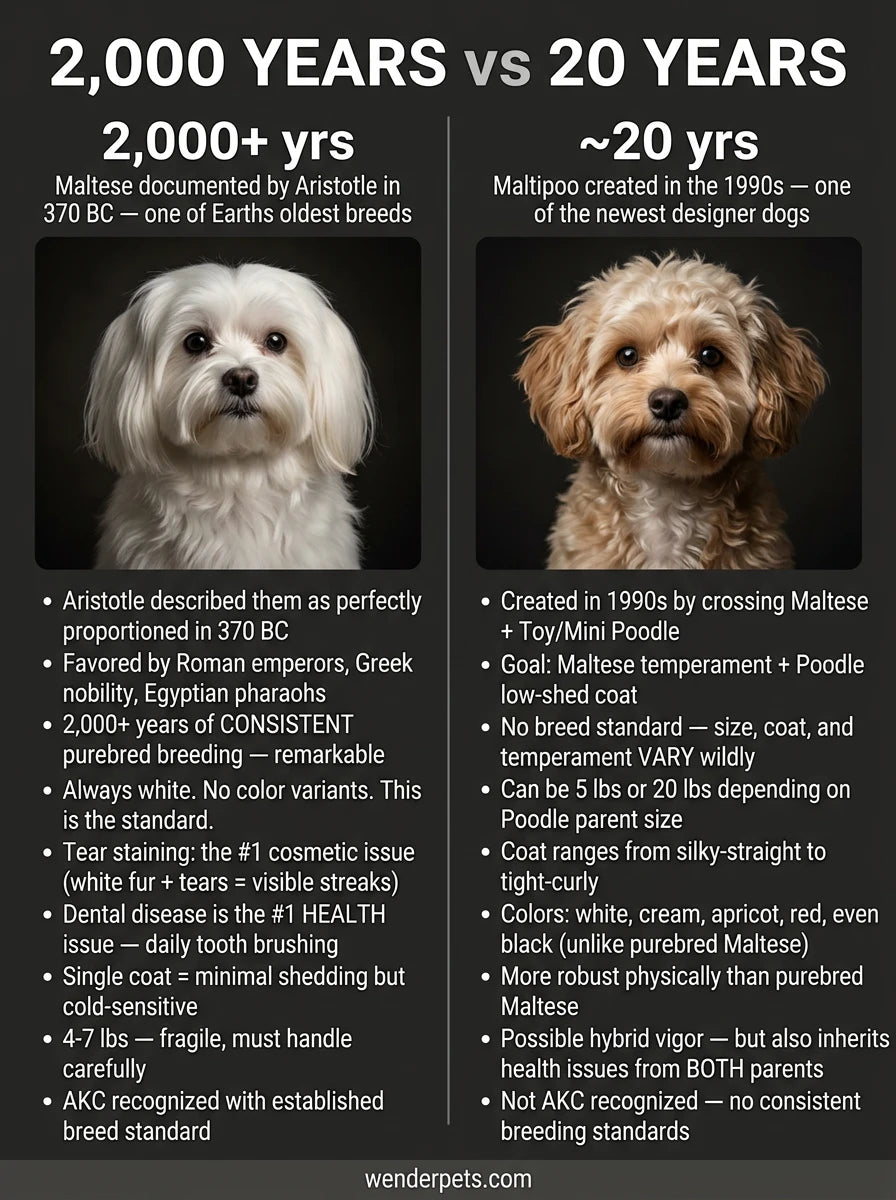
The Maltese is one of the world's oldest dog breeds — a purebred companion with 2,000+ years of documented history. The Maltipoo is a Maltese-Poodle cross that's been around for maybe 30 years.
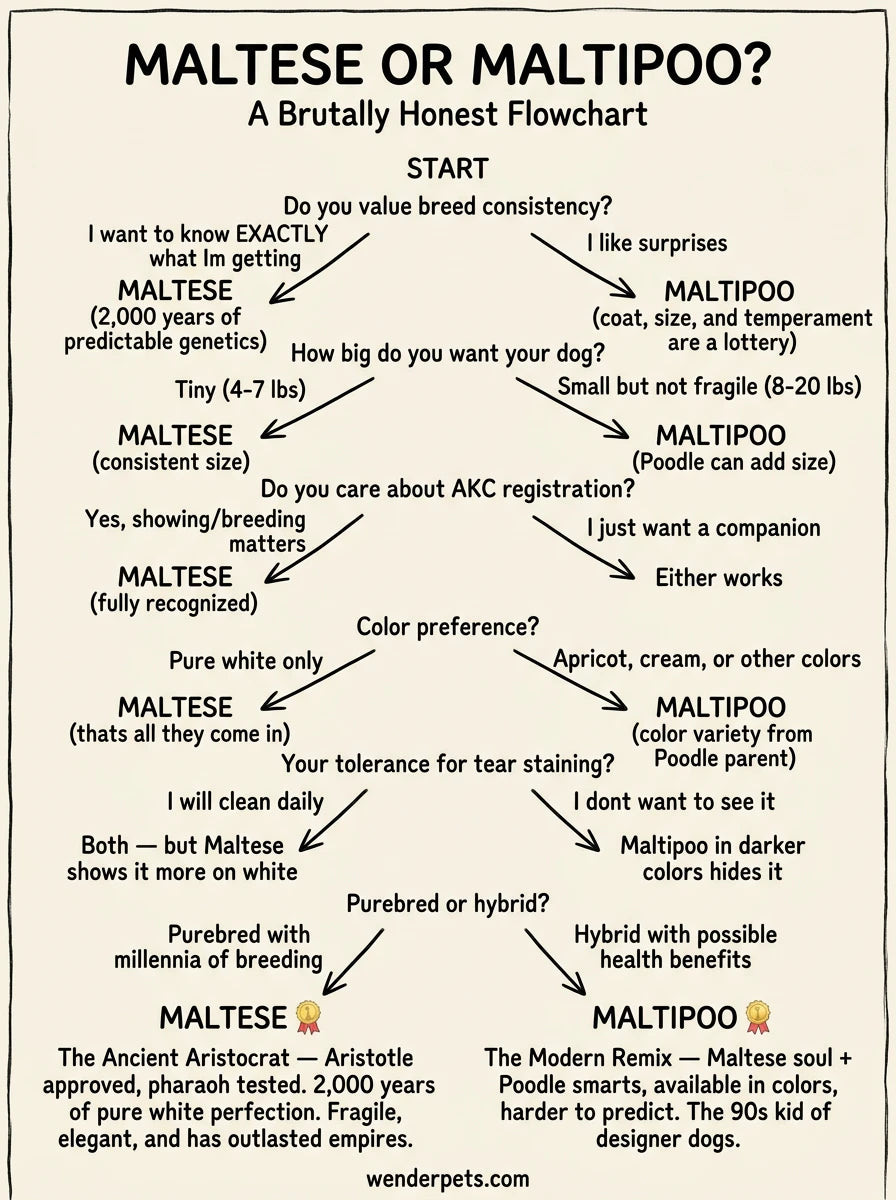
Both are tiny, adorable, and affectionate. But choosing between them comes down to whether you value predictability or hybrid vigor — and how much you're willing to gamble on coat type.
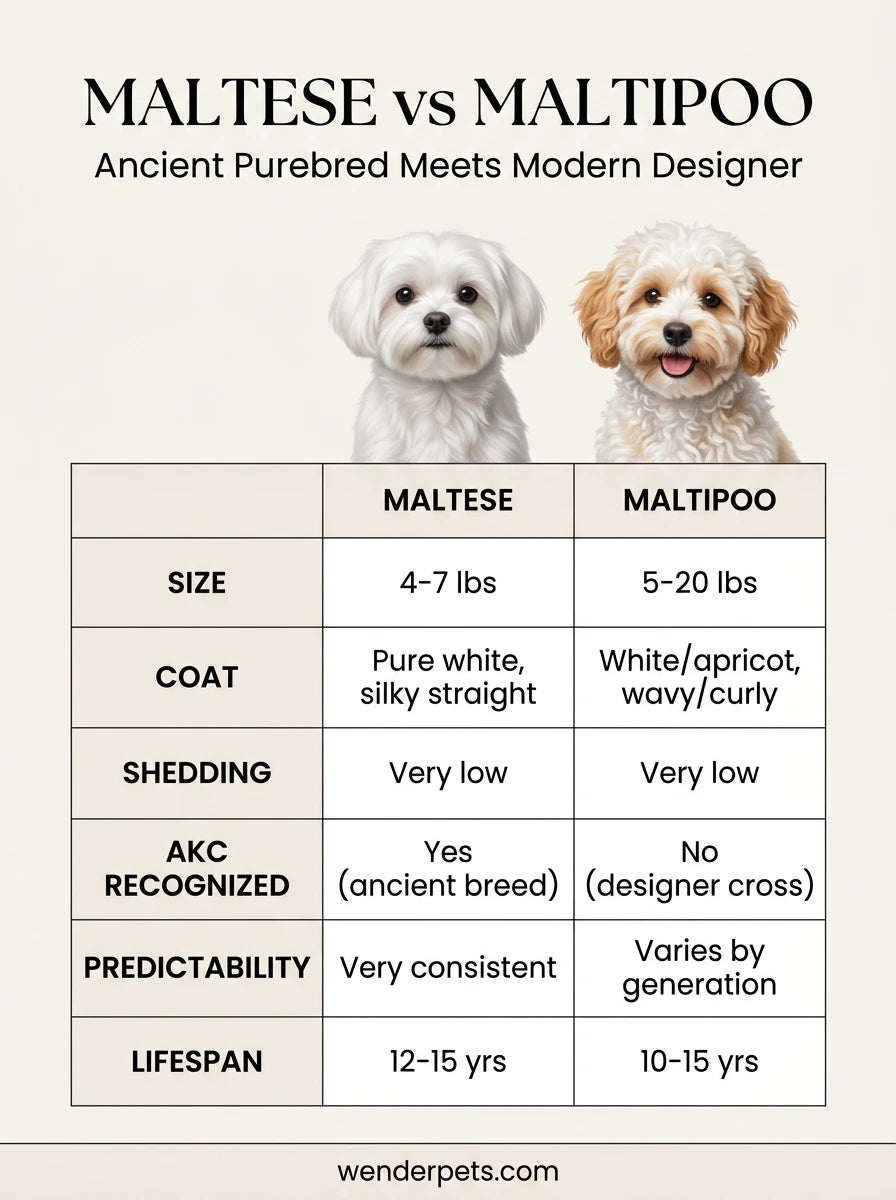
The Quick Comparison
🏛️ Maltese
- Weight: 4-7 lbs
- Coat: Always white, silky, straight
- Predictability: High — centuries of breeding
- Personality: Gentle, playful, people-focused
- Shedding: Minimal (single coat)
- Lifespan: 12-15 years
🧬 Maltipoo
- Weight: 5-20 lbs (varies widely)
- Coat: Wavy to curly, various colors possible
- Predictability: Low — each puppy is unique
- Personality: Affectionate, playful, slightly more active
- Shedding: Low to minimal
- Lifespan: 10-15 years
The Predictability Question
With a Maltese, you know exactly what you're getting. White coat, 4-7 pounds, gentle temperament, specific health profile. Two thousand years of selective breeding has created remarkable consistency.
With a Maltipoo, you're rolling dice — especially in F1 (first-generation) crosses. The puppy could favor the Maltese side, the Poodle side, or land anywhere in between. Size, coat type, color, and temperament all vary significantly from puppy to puppy, even within the same litter.
The Coat Reality
Maltese: That iconic silky white coat is gorgeous but high-maintenance. Daily brushing, regular professional grooming, and constant tear stain management are non-negotiable. The coat is always white, always straight, always silk-like. What you see in pictures is what you get (after considerable grooming effort).
Maltipoo: The Poodle influence can create wavy, curly, or anywhere-in-between coats in white, cream, apricot, or occasionally other colors. Curly Maltipoos may mat more easily. The "benefit" of reduced shedding depends entirely on which parent's coat genetics dominate — there's no guarantee.
Personality Differences
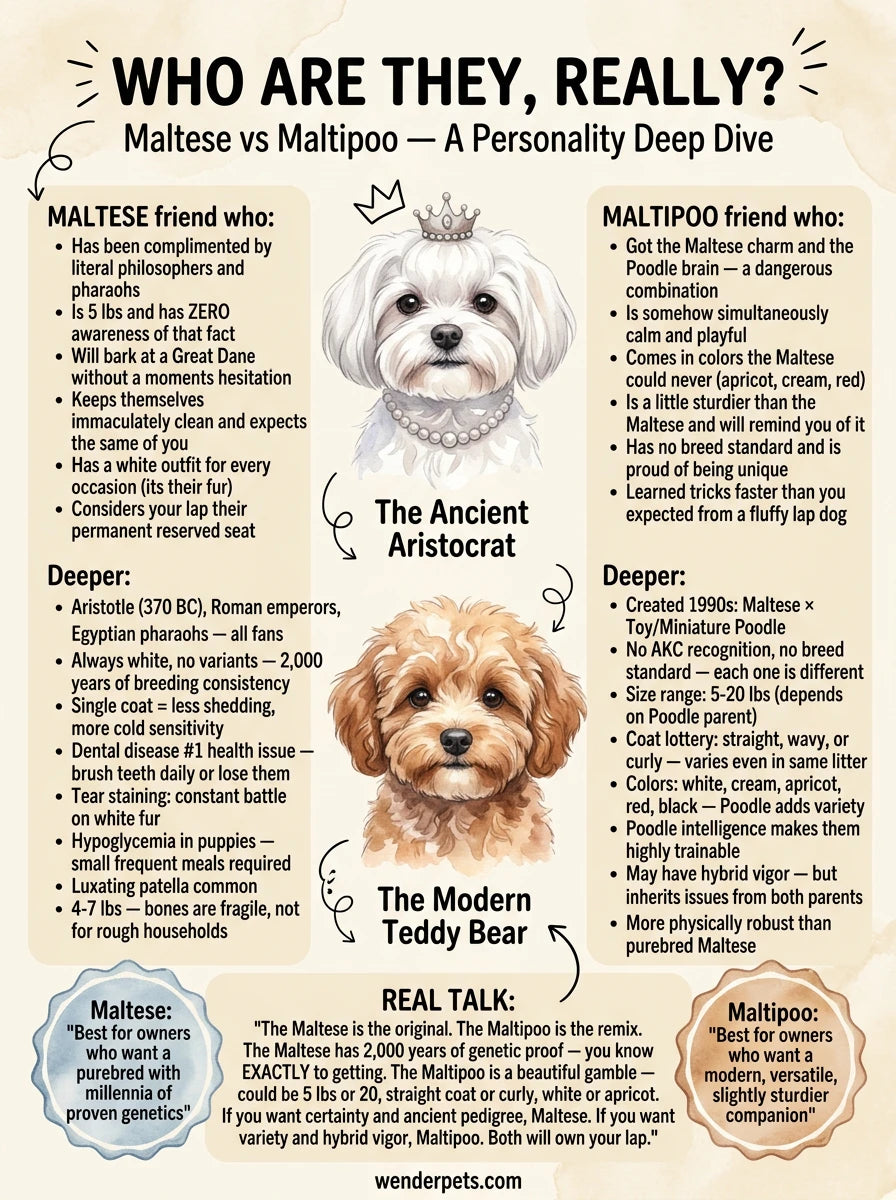
Both breeds are affectionate lap dogs, but the Poodle influence gives Maltipoos a slight edge in energy and trainability. Poodles are among the most intelligent breeds, and that translates to Maltipoos that are often slightly quicker to learn tricks and slightly more eager during training sessions.
Maltese are more dignified and less driven to perform. They'll learn what pleases you, but they're not trying to graduate top of the class. They're content with being charming — and they know it works.
Health Considerations
Maltese Health Watch
- • Patellar luxation
- • Patent ductus arteriosus
- • Portosystemic liver shunt
- • Dental disease (very common)
- • Hypoglycemia (puppies)
Maltipoo Health Watch
- • Patellar luxation (from both sides)
- • Progressive retinal atrophy
- • Epilepsy
- • Dental disease
- • May benefit from hybrid vigor
Maltipoos may benefit from "hybrid vigor" — the tendency for mixed breeds to be healthier than either parent breed. However, this isn't guaranteed, and both parents should still be health-tested.
The Breeding Ethics Question
🔍 Breeder Quality Matters More Than Breed Type
Whether you choose a Maltese or Maltipoo, the quality of the breeder is the single most important factor. A well-bred Maltese from a reputable breeder will be healthier and more predictable than a Maltipoo from a puppy mill — and vice versa. Ask for health clearances, meet the parents, and avoid anyone who can't show you where the puppies were raised.
The Verdict
Choose a Maltese if you...
- • Want predictable size, coat, and temperament
- • Love the classic white silky look
- • Value breed history and established lines
- • Want to show or compete (AKC recognized)
Choose a Maltipoo if you...
- • Want a slightly more active, trainable companion
- • Are open to different coat types and colors
- • Value potential hybrid vigor
- • Don't need AKC recognition or breed predictability