Wender Pets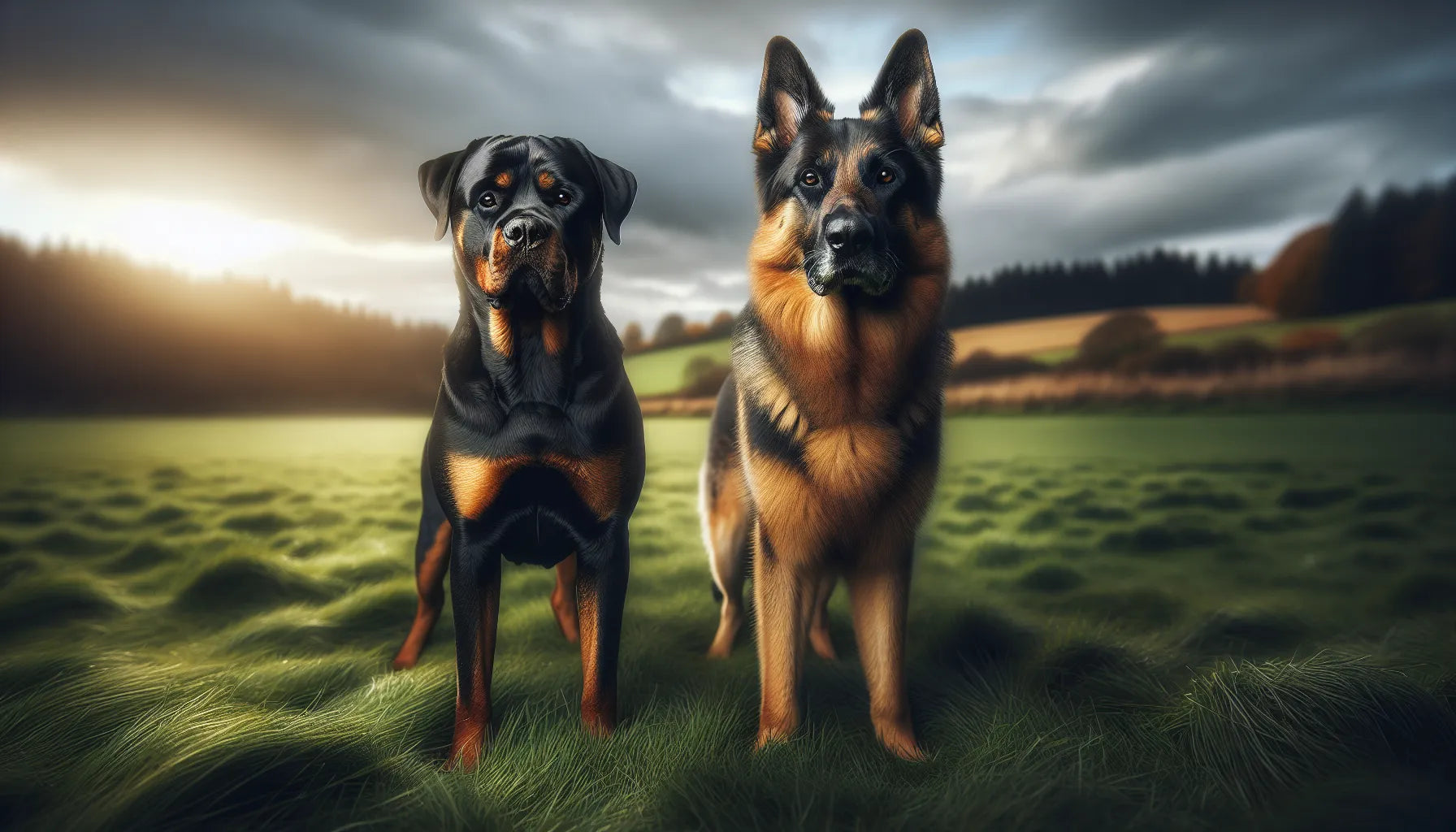
The Rottweiler and the German Shepherd sit at the top of nearly every "best guard dog" list for good reason. Both are powerful, intelligent, and fiercely loyal. Both have working-dog heritage that runs bone-deep.
But they approach protection — and life — very differently.
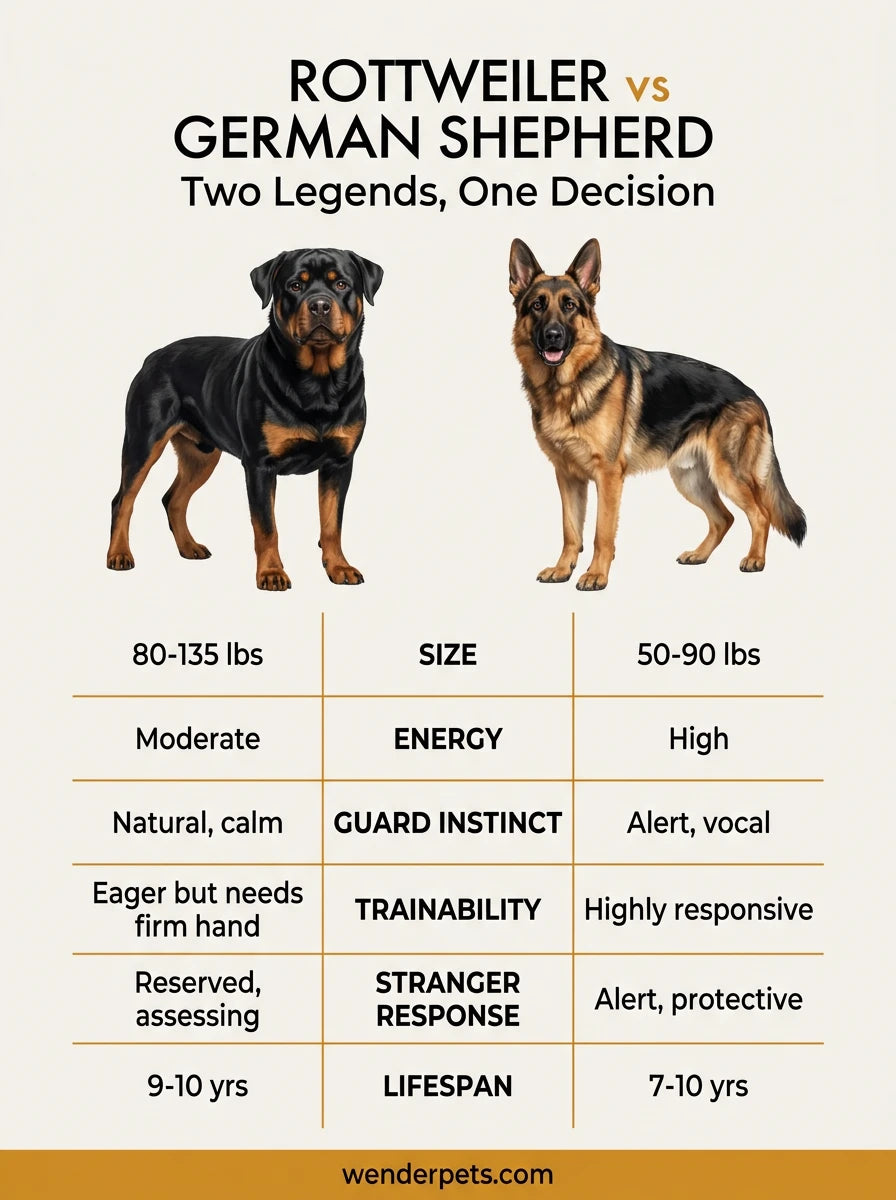
The Quick Comparison
🛡️ Rottweiler
- Weight: 80-135 lbs
- Guard style: Calm, confident, wait-and-assess
- Energy: Moderate — surprisingly chill at home
- Trainability: Willing but thinks independently
- Shedding: Moderate year-round
- Lifespan: 8-10 years
🐕 German Shepherd
- Weight: 50-90 lbs
- Guard style: Alert, vocal, always on patrol
- Energy: High — needs a job or goes crazy
- Trainability: Among the best in all breeds
- Shedding: Extreme — "German Shedder"
- Lifespan: 7-10 years
Guarding Philosophy
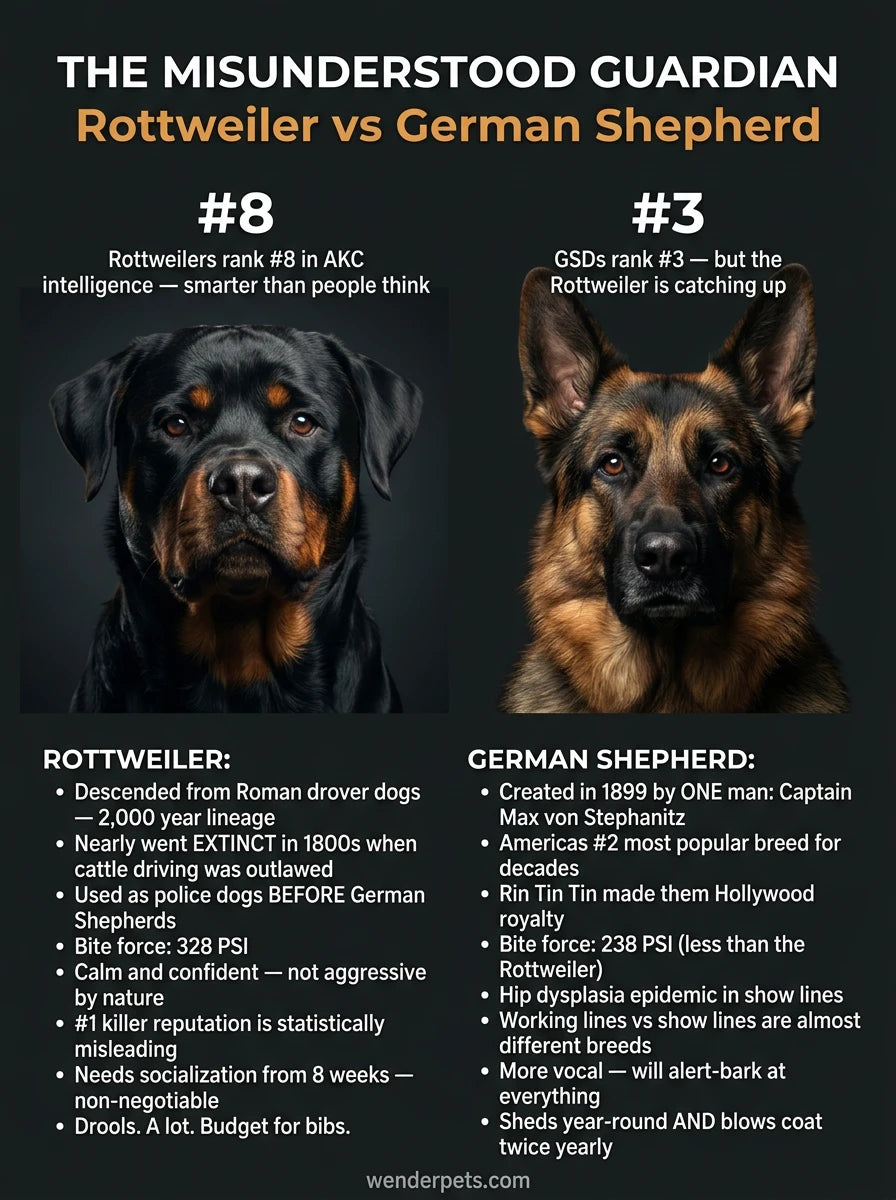
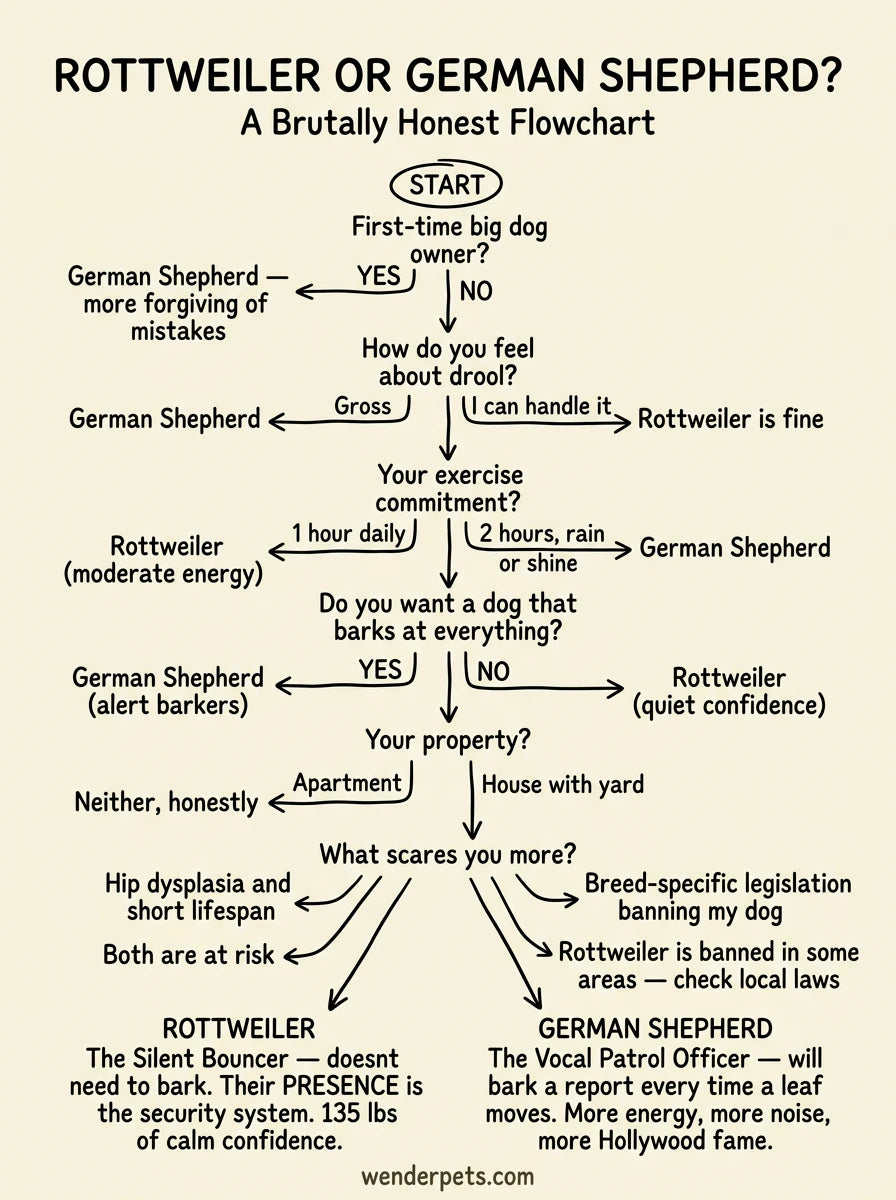
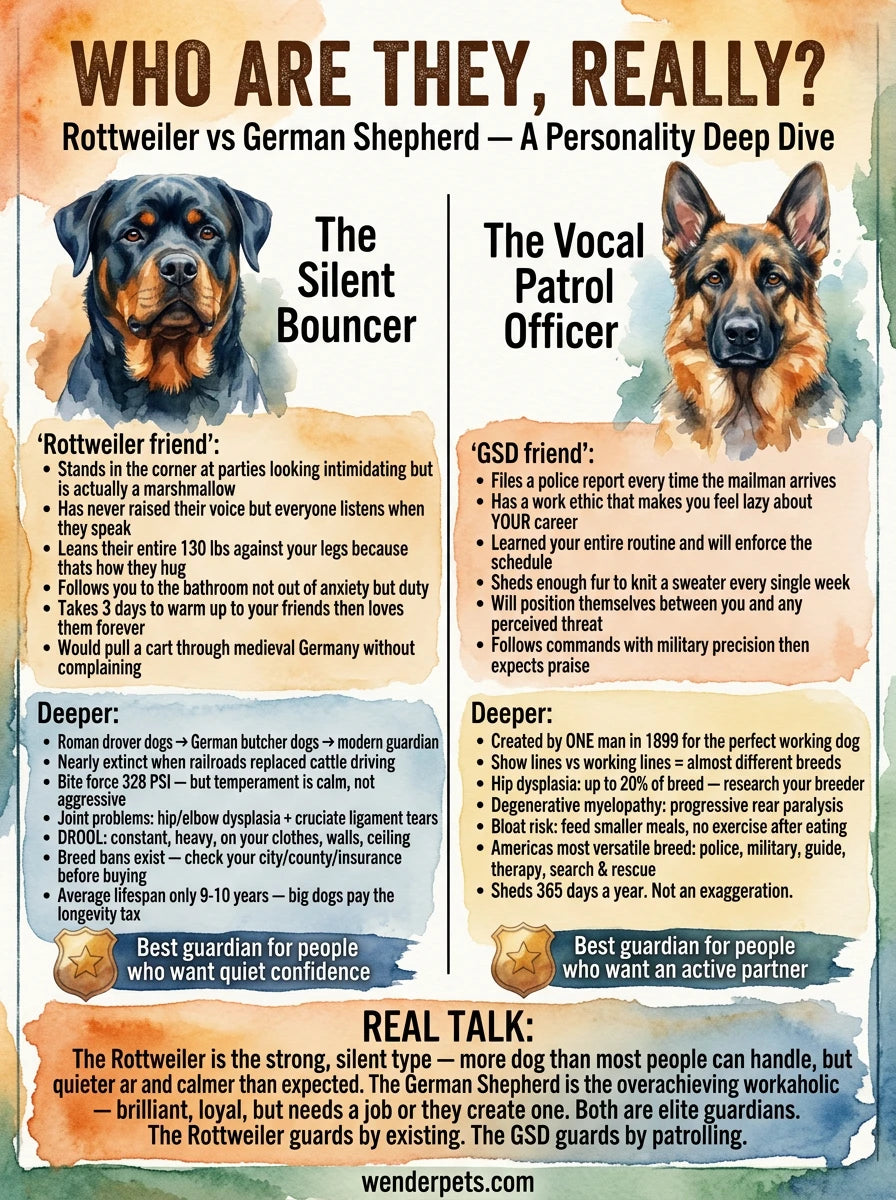
A Rottweiler guards by being. Their sheer presence — that massive head, that confident stance, that unblinking stare — is the deterrent. They don't bark at every noise. They assess threats quietly, and if something is genuinely wrong, they act. They're bouncers, not alarm systems.
A German Shepherd guards by patrolling. They're constantly scanning, constantly alert. They'll bark at unfamiliar sounds, investigate anything out of place, and position themselves between their family and perceived threats. They're security systems — always monitoring, always responding.
Temperament at Home
Here's what surprises most people: Rottweilers are couch dogs. Seriously. After a good walk or play session, a well-exercised Rottie wants nothing more than to lie on the couch with their head in your lap. They're affectionate to the point of being clingy, and many owners describe them as "100-pound lap dogs."
German Shepherds don't really turn off. Even at rest, they're watching the door, tracking sounds, and keeping mental tabs on where every family member is. They need mental stimulation as much as physical exercise — puzzle toys, training sessions, or an actual job to perform.
Training Differences
The German Shepherd is one of the most trainable breeds on Earth. There's a reason they dominate police work, search and rescue, military operations, and service dog programs. They want to work with you.
Rottweilers are also highly trainable, but with a caveat: they think for themselves. A GSD will follow a command because you said so. A Rottie will follow a command because they've decided you're worth listening to. This makes early socialization and consistent leadership critical.
Health Reality Check
Rottweiler Health Concerns
- • Hip and elbow dysplasia
- • Osteosarcoma (bone cancer) — high risk
- • Heart conditions (aortic stenosis)
- • Bloat (GDV)
- • Cruciate ligament tears
German Shepherd Health Concerns
- • Hip and elbow dysplasia (very common)
- • Degenerative myelopathy
- • Bloat (GDV)
- • Exocrine pancreatic insufficiency
- • Perianal fistulas
Neither breed wins on health. Both have significant genetic health concerns that require tested parents and proactive veterinary care. Cancer is the #1 killer in Rottweilers. Joint disease is endemic in both breeds.
The Verdict
Choose a Rottweiler if you...
- • Want a calm, confident home guardian
- • Prefer a dog that relaxes at home after exercise
- • Want intimidating presence without constant barking
- • Can provide firm, consistent leadership
Choose a German Shepherd if you...
- • Want a dog that lives to work and train
- • Need an active partner for hiking, running, or dog sports
- • Want maximum trainability and versatility
- • Can provide daily mental stimulation beyond just walks
🎁 Honor Your Guardian
Breed-specific gifts for Rottweiler and German Shepherd families.
Rottweiler Gifts →GSD Gifts →