 Wender Pets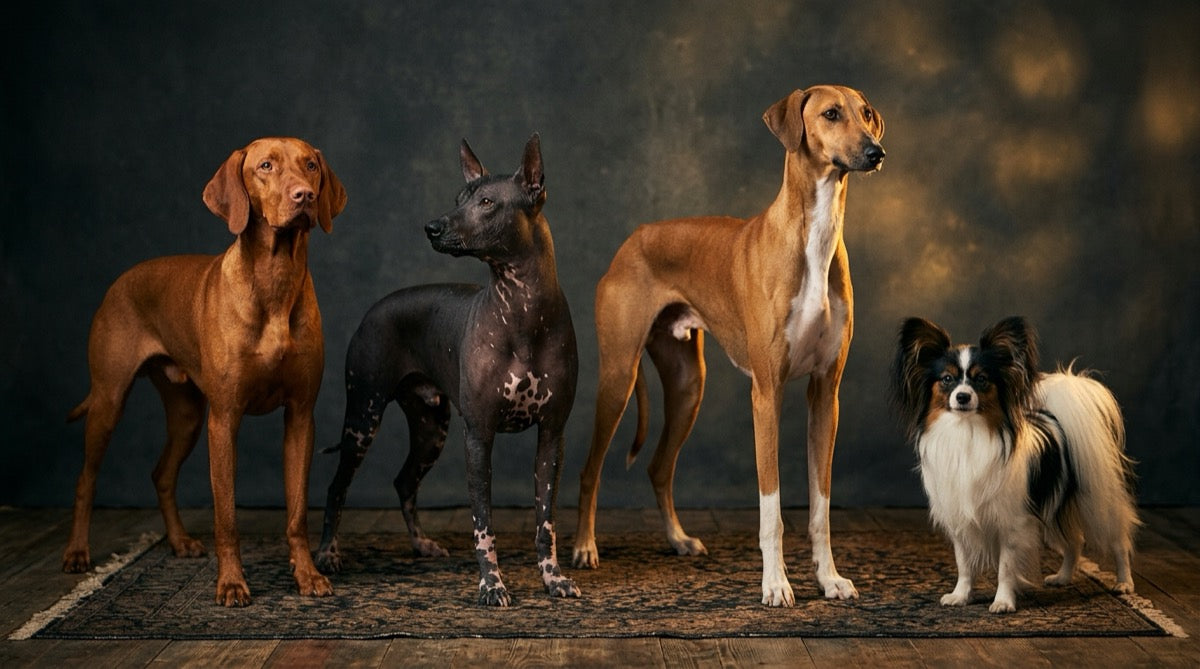
There's a particular look that crosses a rare breed owner's face when someone at the dog park says, "What kind of dog is that?" It's a mix of pride, delight, and the barely suppressed excitement of someone who has been waiting for this exact question all day. They have a speech prepared. It involves history, genetics, and at least one reference to an ancient civilization. They are not going to keep it short.
These owners chose their dogs the way some people choose wine — not the popular label, but the obscure vineyard with the interesting backstory. They're not trying to be different (okay, some of them are). They found a breed that spoke to something specific in their personality, and now they're ambassadors for life. Here are eight rare breeds that inspire that kind of devotion — and the humans who can't stop talking about them.
Vizsla — The Aristocrat's Running Partner
The Vizsla isn't quite as rare as the others on this list — they've crept into the AKC's top 40 — but they still trigger the "what kind of dog is that?" question with reliable frequency. And Vizsla owners are perhaps the most evangelical of all rare breed devotees.
Originating in Hungary over a thousand years ago, the Vizsla was the hunting dog of Magyar warriors and later the prized companion of Hungarian aristocracy. They survived the Ottoman occupation, both World Wars, and the Soviet era — at one point nearly going extinct before dedicated breeders smuggled them out of Hungary. That survival story is part of their appeal: this is a breed that has been loved fiercely enough to be rescued from history's worst chapters.
Vizsla owners tend to be athletic, outdoorsy, and slightly intense. They run marathons, do triathlons, or at minimum take their dog on two-hour hikes that they describe as "a light outing." They chose a Velcro dog on purpose because they wanted a companion that matches their energy. They will show you 400 photos of their dog pointing at a butterfly, and every single one is gorgeous.
Papillon — The Dog That's Smarter Than You Think
The Papillon looks like a toy. It is not a toy. Named for its butterfly-wing ears (papillon is French for butterfly), this five-pound dynamo consistently ranks in the top ten for canine intelligence, outwitting breeds five times its size in obedience and agility competitions.
Papillons have been the companions of European royalty since the 16th century — Marie Antoinette reportedly carried one to the guillotine. They appear in paintings by Rubens, Rembrandt, and Goya. They're essentially the art world's favorite dog, and they carry that legacy with the confidence of a breed that has been sitting on silk pillows for 500 years.
Papillon owners are often people who initially wanted a small, easy lapdog and discovered they accidentally adopted a tiny genius with strong opinions. They're the type to enroll their 5-pound dog in agility class and watch it outperform Shepherds. They are quietly smug about this, and they should be.
Xoloitzcuintli — The 3,000-Year-Old Conversation Starter
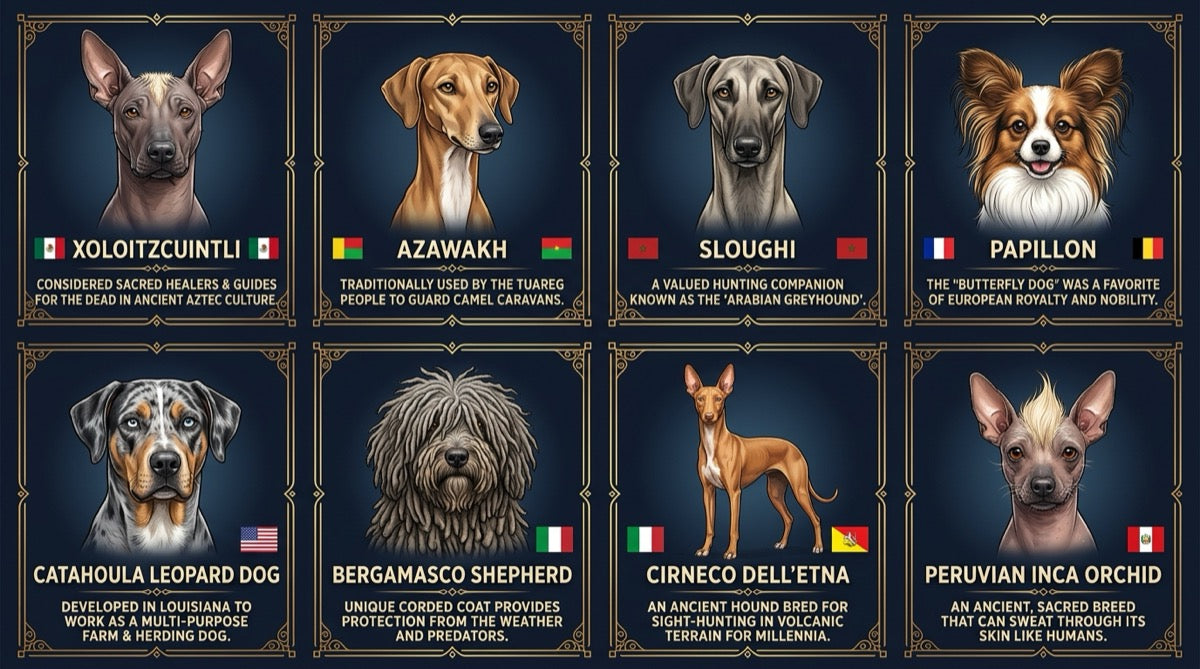
The Xoloitzcuintli (show-low-eats-QUEENT-lee) — the Xolo — is a hairless breed that dates back over 3,000 years to the Aztec and Maya civilizations. They were considered sacred, believed to guide souls through the underworld, and were often buried alongside their owners to serve as spiritual companions in the afterlife.
They look like nothing else in the dog world. Sleek, elegant, and completely hairless (though a coated variety exists), Xolos have a warm, smooth skin that feels almost human to the touch. They're calm, intelligent, deeply bonded to their family, and profoundly suspicious of strangers — a trait that hasn't changed much since they were guarding Aztec temples.
Xolo owners are a particular subset of dog people. They tend to be artistic, culturally curious, and drawn to history. They didn't want a dog that blends in — they wanted a dog that makes people stop on the sidewalk and stare. They've memorized the pronunciation and they will correct you. Gently, but firmly.
Azawakh — The Desert Sprinter
The Azawakh is a West African sighthound from the Sahel region — a lean, impossibly elegant dog bred by Tuareg nomads to chase gazelles across the Sahara at speeds up to 40 mph. They're one of the newest AKC-recognized breeds (2019) and one of the rarest, with only a few hundred in the United States.
Azawakhs are aloof, independent, and fiercely loyal to their family while being genuinely indifferent to everyone else. They don't do the golden retriever greeting. They assess, they decide, and if they accept you, it feels like an honor because it genuinely is one. Their bond with their primary person is intense and exclusive in a way that other breeds simply don't replicate.
Azawakh owners are quiet, confident people who don't need external validation — which is good, because their dog certainly isn't going to give it to strangers. They appreciate elegance over enthusiasm and independence over obedience. They know their dog is the most beautiful animal in the park, and they don't need you to agree.
Catahoula Leopard Dog — The Southern Original
The Catahoula Leopard Dog is the only breed that originated in Louisiana, named after Catahoula Parish. They're a working dog through and through — bred to track and herd wild boar in swamps, which tells you everything you need to know about their toughness. They often have striking glass eyes (one blue, one brown) and a merle coat pattern that looks like someone spilled paint on a dog and it came out gorgeous.
Catahoulas are intense, independent, and not for first-time owners. They're problem solvers who will test boundaries and figure out your weaknesses faster than you can set rules. They need a job — if you don't give them one, they'll assign themselves as manager of the household, and they won't be a gentle boss.
Catahoula owners tend to be rural, outdoorsy, and experienced with dogs. They like a dog that talks back (Catahoulas are vocal in a way that sounds eerily like arguing). They appreciate the chaos. They wouldn't trade it for the most well-behaved Labrador on earth.
Bergamasco Shepherd — The Dog With Dreadlocks
The Bergamasco Shepherd looks like a mop came to life and decided to herd sheep. Its coat forms naturally into flat, felt-like mats called "flocks" that serve as insulation and protection from predators — a feature that developed over centuries in the Italian Alps where the breed guarded flocks at high altitude.
Beneath that extraordinary coat is a calm, intelligent, deeply loyal dog that bonds intensely with its family and takes a patient, watchful approach to everything. Bergamascos don't rush. They observe, they assess, and then they act — usually with more wisdom than their humans. They're gentle with children, wary of strangers, and possess a quiet confidence that comes from being literally armored in their own fur.
Bergamasco owners are patient, detail-oriented people who don't mind explaining their dog's coat to every person they pass on the street. They enjoy the novelty. They've learned to say "no, they don't need to be brushed — the cords are supposed to be there" at least three times per walk, and they say it with a smile every time.
Cirneco dell'Etna — The Ancient Sicilian
The Cirneco dell'Etna (cheer-NEH-ko dell-ET-nah) is a small, elegant sighthound from Sicily that has hunted rabbits on the volcanic slopes of Mount Etna for over 2,500 years. Coins from ancient Syracuse bear its image. It is one of the oldest dog breeds still in existence, and it looks almost exactly the same today as it did in 500 BC.
Cirnecos are sleek, athletic, and surprisingly low-maintenance. They have short coats, moderate exercise needs, and a gentle, affectionate temperament that makes them better apartment dogs than breeds half their energy level. They're quiet, clean, and carry themselves with the understated elegance of a breed that has been perfected by millennia of natural selection rather than human fashion.
Cirneco owners are typically well-traveled, cultured, and deeply interested in history. They probably discovered the breed while visiting Sicily and couldn't get it out of their head. They enjoy owning a dog that looks like it stepped off an ancient coin, and they have the photos from Taormina to prove it.
Pharaoh Hound — The Blushing Hunter
The Pharaoh Hound is Malta's national dog, a graceful sighthound with a trait no other breed shares: it blushes. When excited or happy, a Pharaoh Hound's nose and ears flush bright pink — a visible, physical expression of joy that is as endearing as it is unusual.
Despite the name, Pharaoh Hounds are Maltese, not Egyptian, though they bear a striking resemblance to the dogs depicted in ancient Egyptian tomb paintings. They were bred to hunt rabbits on Malta's rocky terrain, using sight, scent, and hearing in combination — a triple threat that most sighthounds don't possess. They're athletic, playful, and remarkably gentle with their families.
Pharaoh Hound owners are the kind of people who light up when they talk about their dog — which is fitting, since their dog literally lights up when it's happy. They tend to be warm, expressive, and deeply attached. They chose a breed that wears its emotions on its face (and ears, and nose), and that says something lovely about who they are.
Why Rare Breed Owners Are Like This
There's a reason rare breed owners can't stop talking about their dogs. When you own a Golden Retriever, everybody knows what it is. The breed speaks for itself. When you own an Azawakh, you are the breed's voice. You're the ambassador, the educator, the walking Wikipedia entry. Every walk is an opportunity to introduce someone to a breed they've never seen, and that sense of mission becomes part of the ownership experience.
Rare breed owners also tend to be deeply connected to their breed's community. When there are only a few hundred of your dog in the country, you know the breeders, you know the other owners, you share health data and breeding updates. It's more like a family than a fan club. And that's the thing about rare breeds — they don't just give you a dog. They give you a tribe.